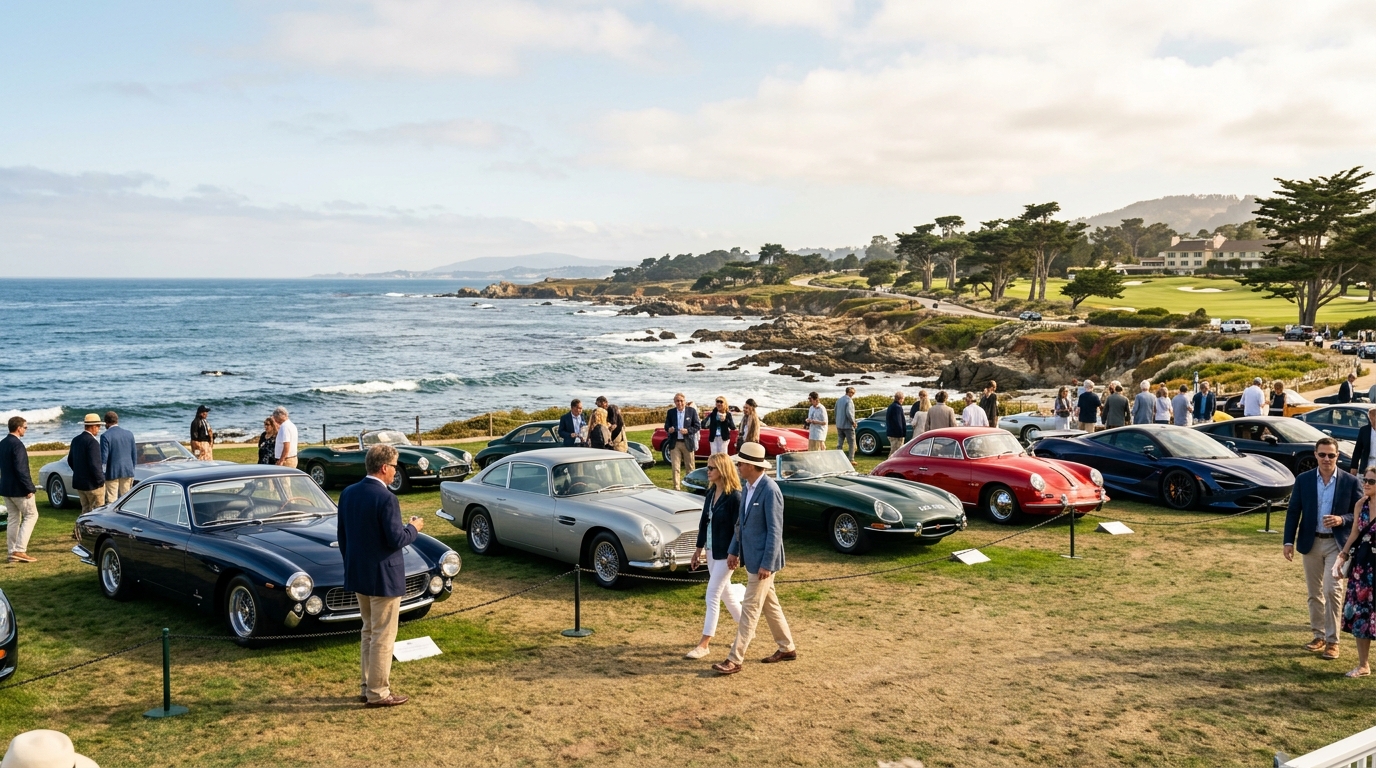
Monterey Car Week 2026 brought together historic race cars, concours winners, modern collectibles, motorcycles, auctions, and automotive fans across the Monterey Peninsula. This year carried extra weight because the Pebble Beach Concours d’Elegance celebrated its 75th edition, while WeatherTech Raceway Laguna Seca expanded its historic racing program with Japanese motorsport icons, world champion riders, and a first-ever hypercar parade.
The week also produced major collector-car auction results, including a record-setting sale for an American automobile. From the 18th fairway at Pebble Beach to the Corkscrew at Laguna Seca, the 2026 edition showed why Monterey remains one of California’s most concentrated celebrations of automotive history and culture.
Pebble Beach Marked Its 75th Concours
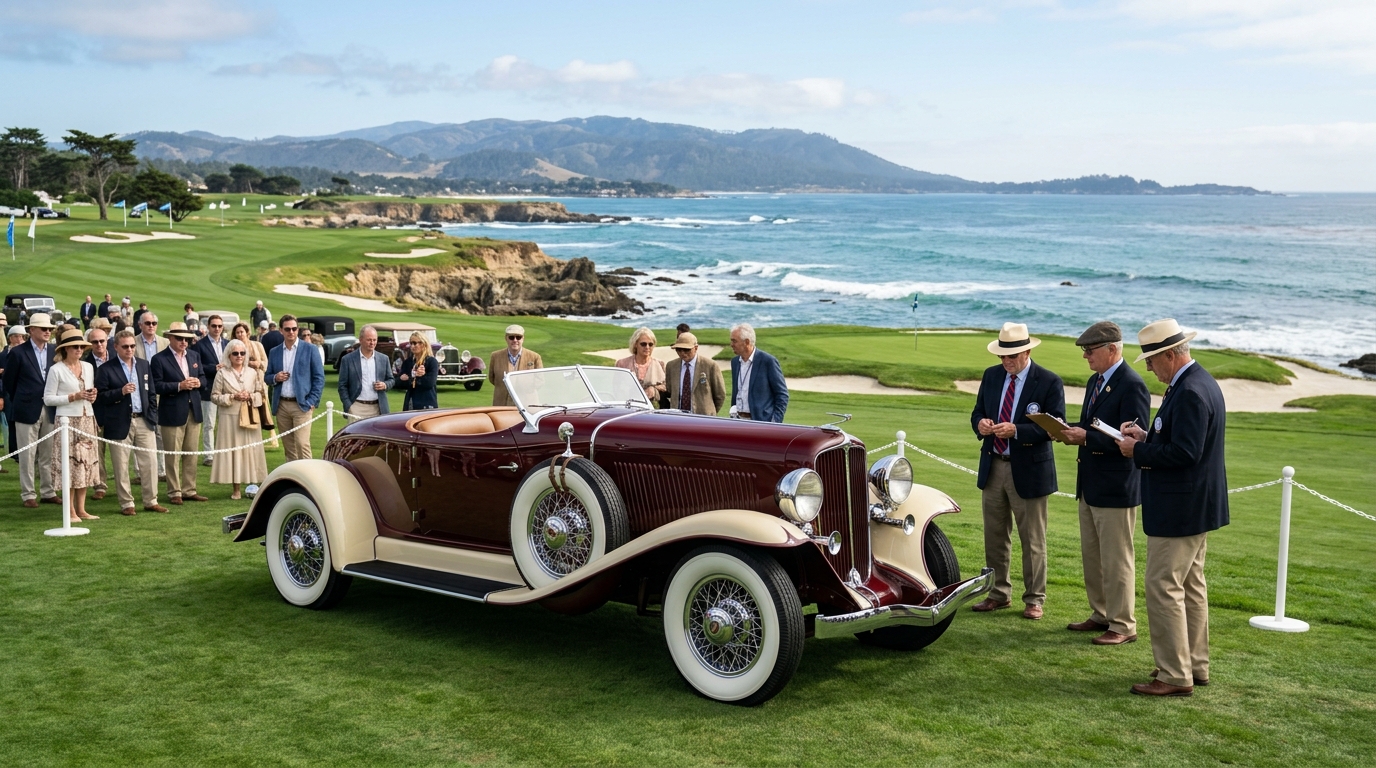
The 75th Pebble Beach Concours d’Elegance took place on August 16, 2026, with 218 cars on the competition field. According to the official Pebble Beach Concours results, the field included 33 international entries from 14 countries and 185 entries from 30 U.S. states.
The top award went to a 1935 Duesenberg SSJ Special Speedster shown by collector Harry Yeaggy. The car was originally owned by actor Clark Gable and is one of only two SSJ Special Speedsters built. Its black finish, compact speedster body, supercharged performance, and Hollywood history made it a memorable winner during the anniversary celebration.
The victory also strengthened Duesenberg’s place in Pebble Beach history. The American marque now has eight Best of Show wins at the Concours. Yeaggy had previously won Pebble Beach Best of Show in 2007 with another 1935 Duesenberg, the SJ Speedster known as the Mormon Meteor.
Beyond the winning car, the anniversary event emphasized the long connection between Pebble Beach and motorsport. The first Concours was held in 1950 alongside the Pebble Beach Road Races, so the 75th celebration offered an opportunity to revisit the event’s roots as both a display of elegance and part of a larger California racing tradition.
Another milestone came away from the judging field. Pebble Beach reported that cumulative charitable giving associated with the Concours surpassed $50 million during the 2026 celebration.
Laguna Seca Put History Back On Track
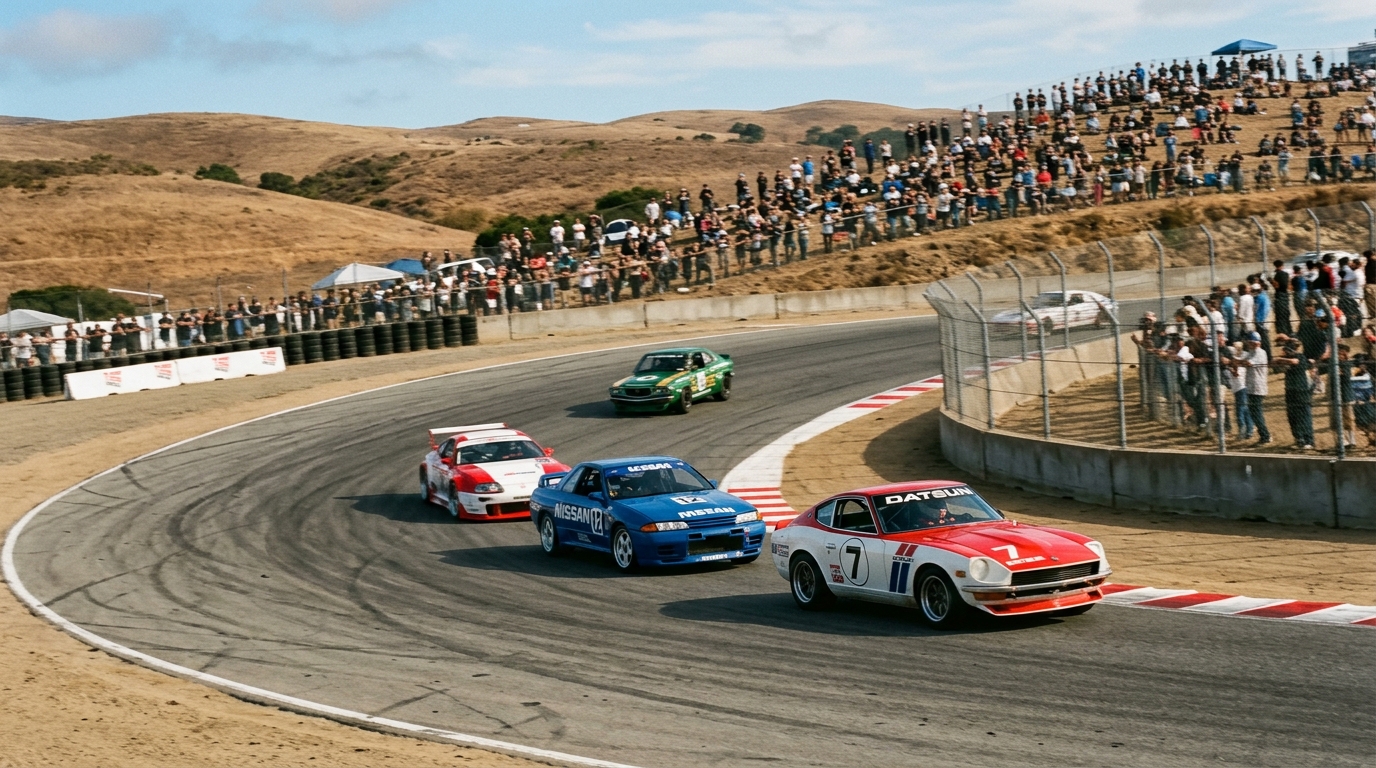
While Pebble Beach focused on preservation and presentation, the Rolex Monterey Motorsports Reunion gave spectators the chance to see historic machinery moving at racing speed. The event ran from August 12 through August 15 at WeatherTech Raceway Laguna Seca.
The official 2026 Motorsports Reunion recap described four days of historic competition, special displays, driver appearances, paddock access, and demonstrations. Hundreds of significant competition cars participated around the 2.238-mile circuit.
One of the new attractions was the first Hypercar Parade at the Reunion. Ultra-rare modern performance cars took exhibition laps rather than remaining static displays. That created a direct connection between the historic machines that built motorsport’s reputation and a newer generation of extreme road and track cars.
The event also welcomed Bonhams to WeatherTech Raceway Laguna Seca for an inaugural auction at the venue. This added another collector-car element to a weekend already built around racing history.
Six World Champions Reunited
Motorcycles became a major part of the 2026 celebration. Six living American 500cc World Grand Prix champions returned to Laguna Seca: Kenny Roberts, Freddie Spencer, Eddie Lawson, Wayne Rainey, Kevin Schwantz, and Kenny Roberts Jr.
The group represented an extraordinary period in American motorcycle racing. Together, the six riders captured 14 of the 23 500cc World Championships contested between 1978 and 2000. During Monterey Car Week, they returned to the track for exhibition laps on motorcycles connected to that era.
Japanese Motorsport Took Center Stage
Japanese performance was the featured theme of the 2026 Motorsports Reunion. Historic cars and motorcycles from manufacturers including Mazda, Toyota, Honda, Nissan, Yamaha, Acura, Lexus, Infiniti, Mitsubishi, Subaru, and Suzuki helped show the breadth of Japan’s influence on global competition.
The featured collection included machinery from very different disciplines. Le Mans prototypes, Formula 1 cars, rally cars, IMSA racers, touring cars, and championship motorcycles appeared together during the weekend. Notable examples included the Mazda 787B, Honda-powered Williams FW11, Toyota TS050, BRE Datsuns, Toyota Celica ST185, and Yamaha TZ750.
A new JDM car show also broadened the celebration beyond factory racing history. Restored and modified Japanese road cars gave enthusiasts another way to connect motorsport heritage with the tuner and enthusiast culture that has grown around Japanese vehicles in California and across the United States.
Collector Car Auctions Set Major Records
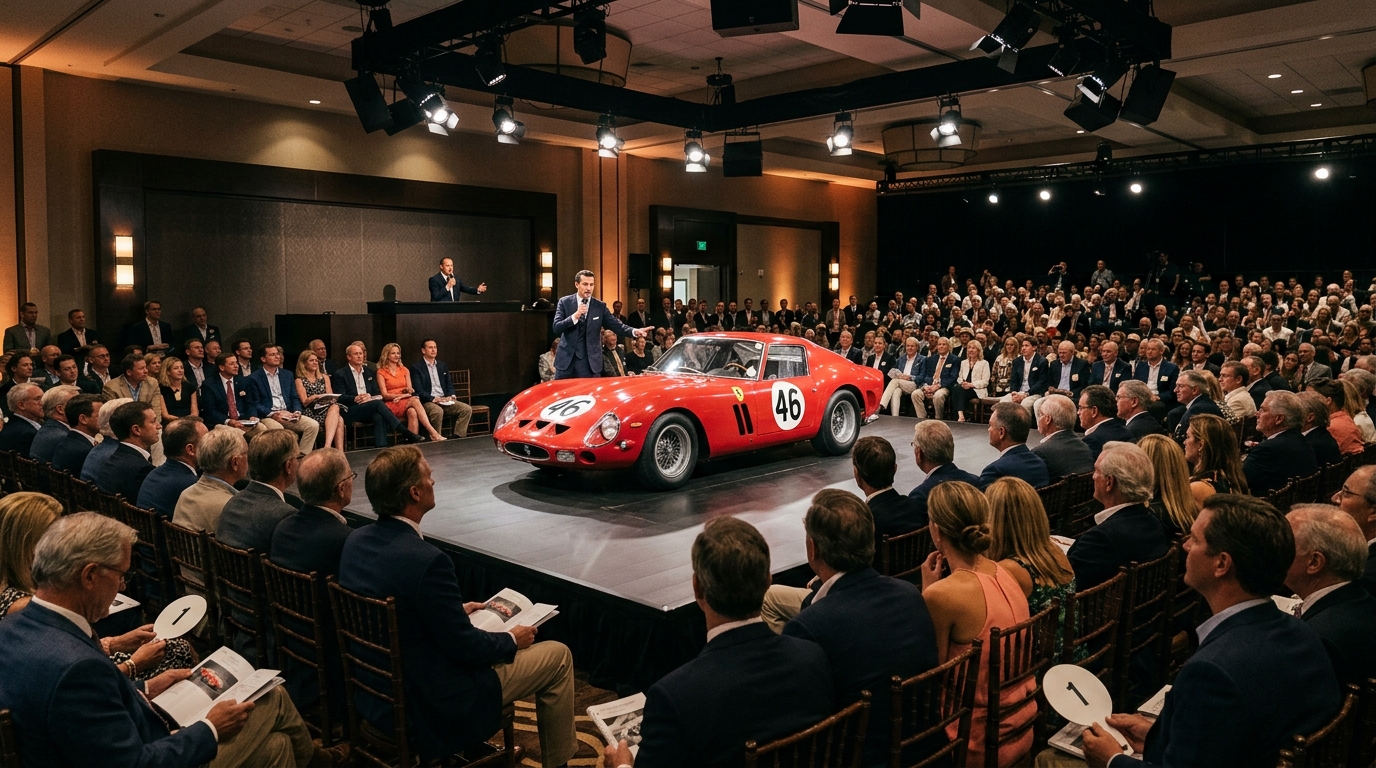
Monterey Car Week is also one of the most closely watched periods of the year for the collector-car market, and 2026 produced several notable sales.
The biggest headline came from Gooding Christie’s Pebble Beach Auctions. A 1964 Shelby Cobra Daytona Coupe sold for $42,905,000, setting a new auction record for an American car. The car was associated with Carroll Shelby and represented one of the most important designs from the period when Shelby American challenged Ferrari in international sports-car racing.
According to Gooding Christie’s 2026 Monterey results, its two-day Pebble Beach sale generated more than $159 million, with 158 lots sold and a 94 percent sell-through rate. A 1963 Ferrari 250 P was another major result at $18,705,000.
Broad Arrow also posted a strong result at its first auction held at The Quail Golf Club. The company reported $97.4 million in sales and an 85 percent sell-through rate. Its top sale was a 2003 Ferrari Enzo at $10,675,000. The official 2026 Quail Auction results also reported nine world records during the two-day event.
At Laguna Seca, Bonhams’ new auction location produced another high-profile sale when a 2024 Bugatti Chiron Super Sport sold for $4.57 million. Taken together, the auction results showed continued demand for historically significant competition cars as well as limited-production modern supercars.
Why Monterey Car Week 2026 Stood Out
No single event defines Monterey Car Week. Its appeal comes from the contrast between carefully judged classics, active historic racing, modern performance cars, motorcycles, auctions, enthusiast gatherings, and new automotive ideas appearing within the same part of California over a short period.
The 2026 edition was particularly notable because several milestones converged. Pebble Beach celebrated 75 years and crowned a rare Duesenberg with Hollywood history. Laguna Seca placed Japanese motorsport at the center of its program and reunited six American motorcycle world champions. Hypercars took to the track in a new parade, while auctions generated record prices for some of the world’s most significant collector cars.
Those moments also demonstrate that car culture is broader than collecting expensive automobiles. Monterey Car Week connects design, engineering, racing, restoration, preservation, enthusiast communities, and automotive history. A prewar Duesenberg, a Japanese Le Mans prototype, a championship motorcycle, and a modern hypercar can attract very different audiences, yet all fit within the same week.
For California automotive culture, Monterey remains unusual because the cars are not confined to one kind of experience. Some are judged on a fairway, some race through the Corkscrew, some cross an auction block, and others appear in enthusiast displays. The 2026 edition brought those worlds together with enough major anniversaries, reunions, and record-setting moments to make it one of the year’s defining automotive gatherings.