Advanced driver assistance systems, commonly known as ADAS, are becoming an important part of modern vehicle safety. From automatic emergency braking to lane keeping assistance, these technologies are designed to help drivers recognize hazards, maintain a safe driving path, and respond to potentially dangerous situations. For California motorists, understanding these systems is increasingly important as vehicles become more technologically sophisticated and drivers encounter a growing variety of automated features.
In 2026, advanced driver assistance systems are no longer limited to expensive luxury vehicles. Many mainstream sedans, SUVs, pickup trucks, and electric vehicles offer features that can warn drivers about nearby traffic, maintain a following distance, or provide limited steering assistance. Some vehicles include several of these functions as standard equipment, while others offer them through optional packages or specific trim levels.
These technologies can improve safety when used properly, but they also create questions about driver responsibility, system limitations, vehicle maintenance, and liability after a collision. A driver may believe a vehicle will automatically stop for an obstacle, while the system may have been designed to operate only under certain conditions. A camera may fail to recognize a lane marking, or a radar sensor may be affected by damage or improper calibration.
Understanding what these technologies can actually do is essential for making informed decisions. California drivers should know how ADAS works, which features are most useful, how to maintain them, and what steps to consider if a collision may involve a system malfunction.
This guide explains the major ADAS technologies available in 2026, their practical benefits and limitations, and the safety and liability issues that California vehicle owners should understand.
What Are Advanced Driver Assistance Systems?
Advanced driver assistance systems are electronic technologies that help drivers monitor their surroundings and perform certain driving tasks. They typically use a combination of cameras, radar, ultrasonic sensors, computer processors, and specialized software to identify vehicles, pedestrians, road markings, and potential hazards.
Depending on the feature, a system may provide a visual or audible warning, adjust vehicle speed, apply the brakes, or offer limited steering assistance. Some systems operate only when the vehicle is moving at particular speeds, while others are designed for parking or reversing.
For example, a forward collision warning system may alert a driver when the vehicle approaches traffic ahead too quickly. Automatic emergency braking may intervene if the system detects an imminent collision and determines that braking assistance is appropriate. Lane departure warning can alert the driver when the vehicle begins drifting out of its lane, while lane keeping assistance may apply corrective steering.
These features are designed to support the driver rather than eliminate the need for attention and judgment. Their performance depends on the vehicle’s design, operating conditions, sensor condition, software, and the particular hazard involved.
The National Highway Traffic Safety Administration provides information about these technologies through its driver assistance technology resource. Drivers can use authoritative safety resources alongside their owner’s manuals to understand the purpose and limitations of individual features.
One of the most important distinctions is the difference between driver assistance and fully autonomous driving. A vehicle with adaptive cruise control and lane-centering assistance may help control speed and steering simultaneously, but that does not necessarily mean the vehicle can operate independently of its driver.
California motorists should never assume that a system marketed as advanced, intelligent, or hands-free can safely handle every driving situation. The manufacturer’s operating instructions remain important, and the driver must understand when supervision or intervention is required.
Why ADAS Matters on California Roads in 2026
California has a diverse driving environment. Drivers may travel through dense Los Angeles freeway traffic, navigate crowded San Francisco intersections, commute along major routes in San Diego, or drive through rural highways where lighting and road markings are inconsistent. Each environment creates different challenges for driver assistance technology.
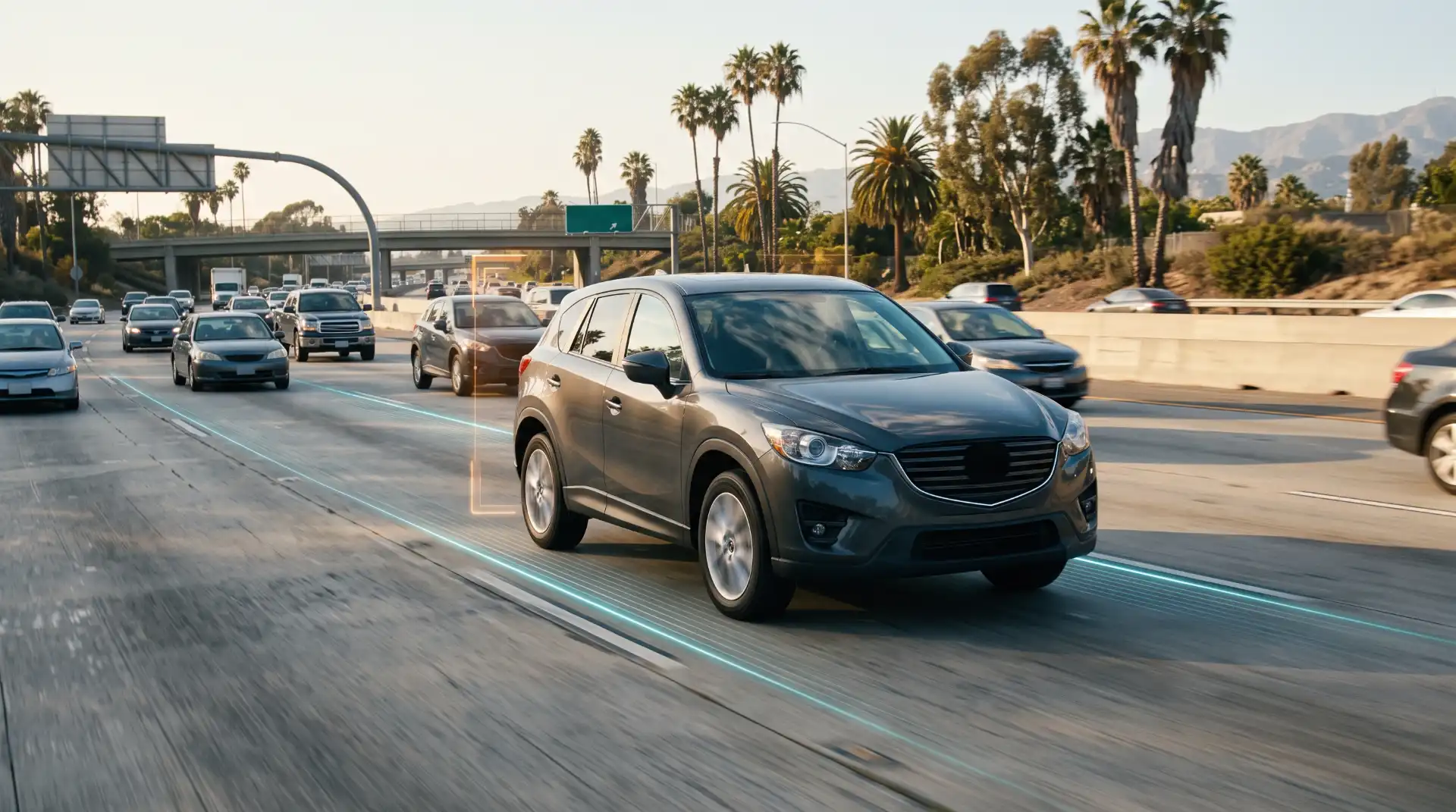
On a congested freeway, adaptive cruise control can help maintain a selected following distance as traffic changes speed. Forward collision warnings may alert a driver when traffic ahead slows unexpectedly. Blind-spot monitoring can provide an additional warning when another vehicle is traveling beside the car during a lane change.
In urban areas, pedestrian detection and automatic emergency braking may help identify certain hazards involving people crossing streets or entering a vehicle’s path. Rear cross-traffic alerts can also be useful when backing out of parking spaces where visibility is limited.
However, the same systems may encounter difficulties when road conditions become complicated. Temporary construction markings, faded lane lines, heavy rain, glare, dust, or unexpected obstacles can affect detection. A system that performs well on a clearly marked freeway may not respond in the same way on a poorly marked road or at a complex intersection.
The practical importance of ADAS also extends to vehicle ownership costs. Drivers considering a newer vehicle may compare safety features alongside fuel economy, reliability, insurance premiums, and maintenance expenses. Advanced sensors and cameras can require specialized inspections or calibration after some repairs, which can affect the cost of maintaining a vehicle.
For California drivers researching broader vehicle safety issues, California Auto Life’s coverage of California auto repair storage fee rules provides related consumer context about vehicle repairs and the costs owners may encounter when a car requires professional service.
As these technologies become more common, drivers need practical information rather than marketing promises. Knowing what a feature does, what it cannot do, and how it should be maintained is an important part of responsible vehicle ownership.
The Most Important ADAS Features Drivers Should Understand
1. Automatic Emergency Braking
Automatic emergency braking, or AEB, is designed to help prevent certain frontal collisions or reduce their severity. Depending on the vehicle, the system may use cameras, radar, or a combination of sensors to identify a vehicle, pedestrian, or other object in the vehicle’s path.
When the system determines that a collision may be imminent, it may first issue a warning. If the driver does not respond appropriately, the vehicle may automatically apply the brakes. Some systems also provide braking assistance when the driver begins braking but does not apply enough pressure to avoid the collision.
AEB can be particularly useful in situations where traffic suddenly slows or a driver does not immediately recognize a developing hazard. Nevertheless, automatic braking is not a guarantee that a crash will be avoided. The system may have difficulty recognizing certain objects, and its performance can vary according to speed, visibility, road conditions, and the technology installed in the vehicle.
California drivers should continue maintaining a safe following distance and watching traffic ahead. They should never deliberately approach another vehicle or obstacle to test whether automatic braking will activate.
2. Lane Departure Warning and Lane Keeping Assistance
Lane departure warning systems monitor lane markings and alert drivers when the vehicle appears to drift out of its lane without an appropriate signal. Lane keeping assistance may go further by applying corrective steering or another limited intervention to help the vehicle remain within detected lane boundaries.
These features can provide useful assistance on long freeway journeys, particularly when a brief lapse in attention causes a vehicle to move toward another lane. However, lane detection depends on the quality of road markings and the system’s ability to interpret the surrounding environment.
Construction zones can be especially challenging. Temporary markings, cones, barriers, and abrupt lane changes may create situations in which a system has difficulty identifying the intended path. Drivers must follow posted signs, observe traffic directions, and take control when the road layout becomes uncertain.
Lane keeping assistance should also not be confused with a guarantee that a vehicle will stay centered under all circumstances. Drivers remain responsible for monitoring their surroundings and steering safely.
3. Adaptive Cruise Control
Adaptive cruise control adjusts a vehicle’s speed to maintain a selected following distance from traffic ahead. Unlike traditional cruise control, which generally maintains a preset speed, adaptive systems can slow the vehicle when traffic ahead reduces speed.
Some systems support stop-and-go traffic, while others operate only within certain speed ranges. Their capabilities depend on the vehicle’s design and the manufacturer’s operating requirements.
This technology may make freeway driving less tiring, but drivers should not interpret it as permission to stop watching the road. An unexpected lane change, a vehicle entering the driver’s path, or a stationary obstacle may present a challenge that requires immediate intervention.
Drivers should review how their specific system behaves in heavy traffic and whether it is designed to recognize stationary vehicles. They should also remain prepared to brake whenever conditions require it.
4. Blind-Spot Monitoring and Rear Cross-Traffic Alerts
Blind-spot monitoring systems warn drivers when another vehicle is detected in an area beside or slightly behind their car. Depending on the system, a warning may appear in a side mirror, on the dashboard, or through an audible alert.
Rear cross-traffic alerts are designed to detect certain approaching vehicles when a driver reverses out of a parking space or driveway. These systems can be helpful when parked vehicles, walls, or other obstacles limit visibility.
Nevertheless, blind-spot monitoring does not eliminate every blind spot. Motorcycles, bicycles, pedestrians, and rapidly approaching vehicles may not always be detected, depending on the sensor’s range and the surrounding conditions.
Drivers should continue checking their mirrors, looking over their shoulders when appropriate, and observing the entire area before changing lanes. Before reversing, they should also check for children, pedestrians, cyclists, and other obstacles that might not trigger a warning.
5. Parking Assistance and Surround-View Cameras
Parking assistance systems can use cameras and sensors to help drivers maneuver in tight spaces. Some vehicles provide a rear camera, parking distance alerts, or a simulated overhead view created by combining images from several cameras.
These features can be useful in crowded shopping center parking lots, residential garages, and urban parking spaces. They may help drivers judge the distance between the vehicle and nearby objects.
However, camera views can contain blind areas, and the displayed image may not perfectly represent the distance or shape of an obstacle. Sensors may also fail to recognize small, low, or unusually positioned objects.
Drivers should use these features as additional sources of information rather than relying exclusively on the screen. Slow maneuvering, direct observation, and awareness of the surrounding environment remain important.
6. Driver Monitoring and Partial Driving Automation
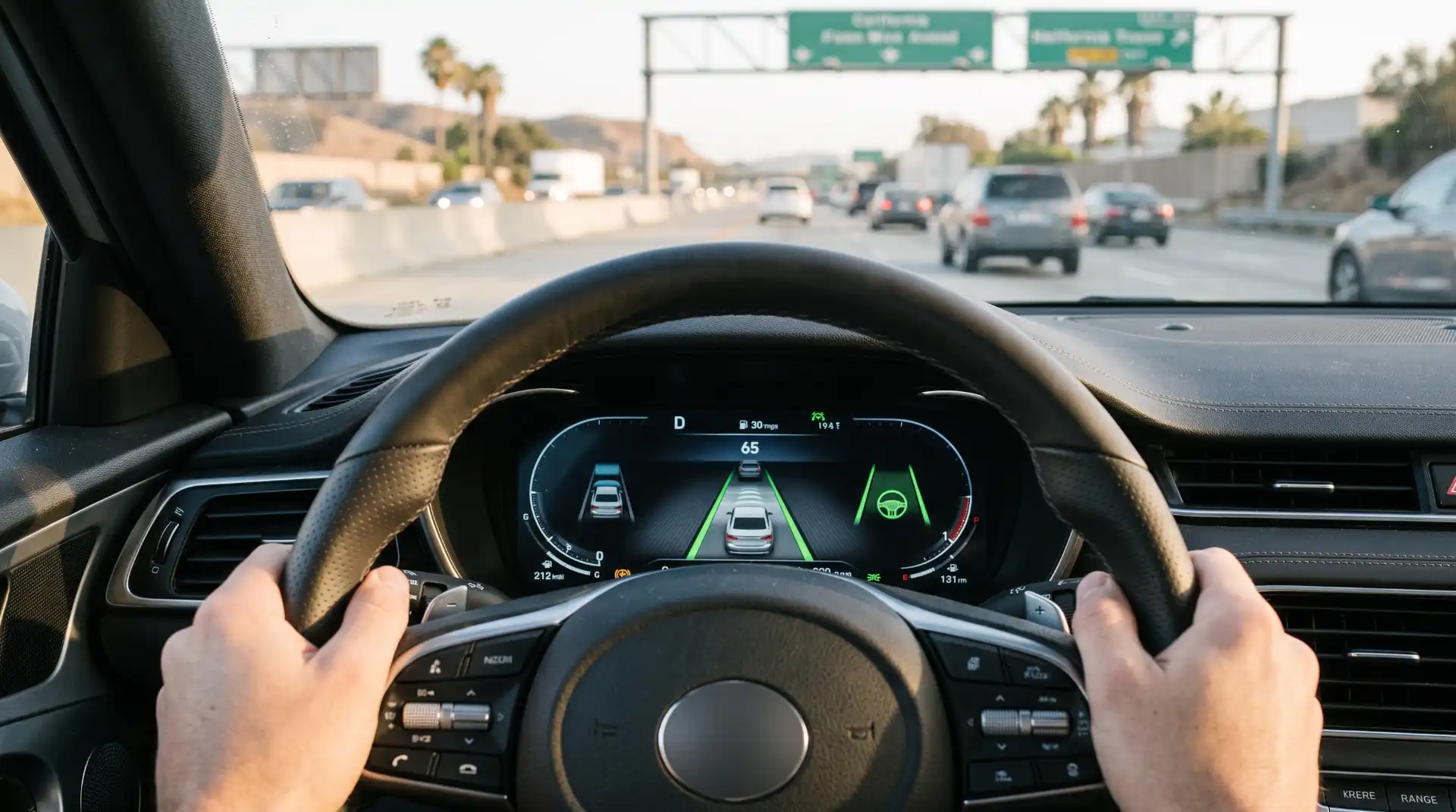
Some modern vehicles combine steering assistance with adaptive cruise control to provide Level 2 driving automation under specified conditions. Certain systems also monitor driver attention through cameras, steering-wheel inputs, or other sensors.
These systems may reduce the amount of routine steering and speed adjustment required during particular driving situations. However, the driver generally remains responsible for supervising the driving task and responding when the system reaches its limits.
The term “hands-free” can create confusion because it may sound as though the vehicle can operate independently. In practice, hands-free functionality may be limited to particular roads, speeds, or environmental conditions, and the driver may still be required to monitor the road continuously.
Drivers should understand the exact conditions under which their vehicle’s system operates. A feature intended for certain controlled-access highways should not automatically be assumed to work safely on residential streets, complex intersections, or construction detours.
How ADAS Sensors Work and Why Maintenance Matters
Driver assistance systems rely on accurate information about the vehicle’s surroundings. Cameras may recognize road markings, traffic signs, pedestrians, and vehicles. Radar can help measure the distance and relative speed of objects, while ultrasonic sensors may assist with low-speed parking maneuvers.
Advanced driver assistance systems require proper maintenance and, in some cases, specialized calibration after vehicle repairs. Before authorizing work, California drivers should understand the potential costs associated with vehicle storage, repair delays, and related charges. Our guide to California auto repair storage fee rules in 2026 explains important considerations for vehicle owners dealing with repair facilities.
The vehicle’s computers process this information and determine whether a warning or intervention is appropriate. The quality of that decision depends on the available sensor data, the system’s programming, and the conditions for which it was designed.
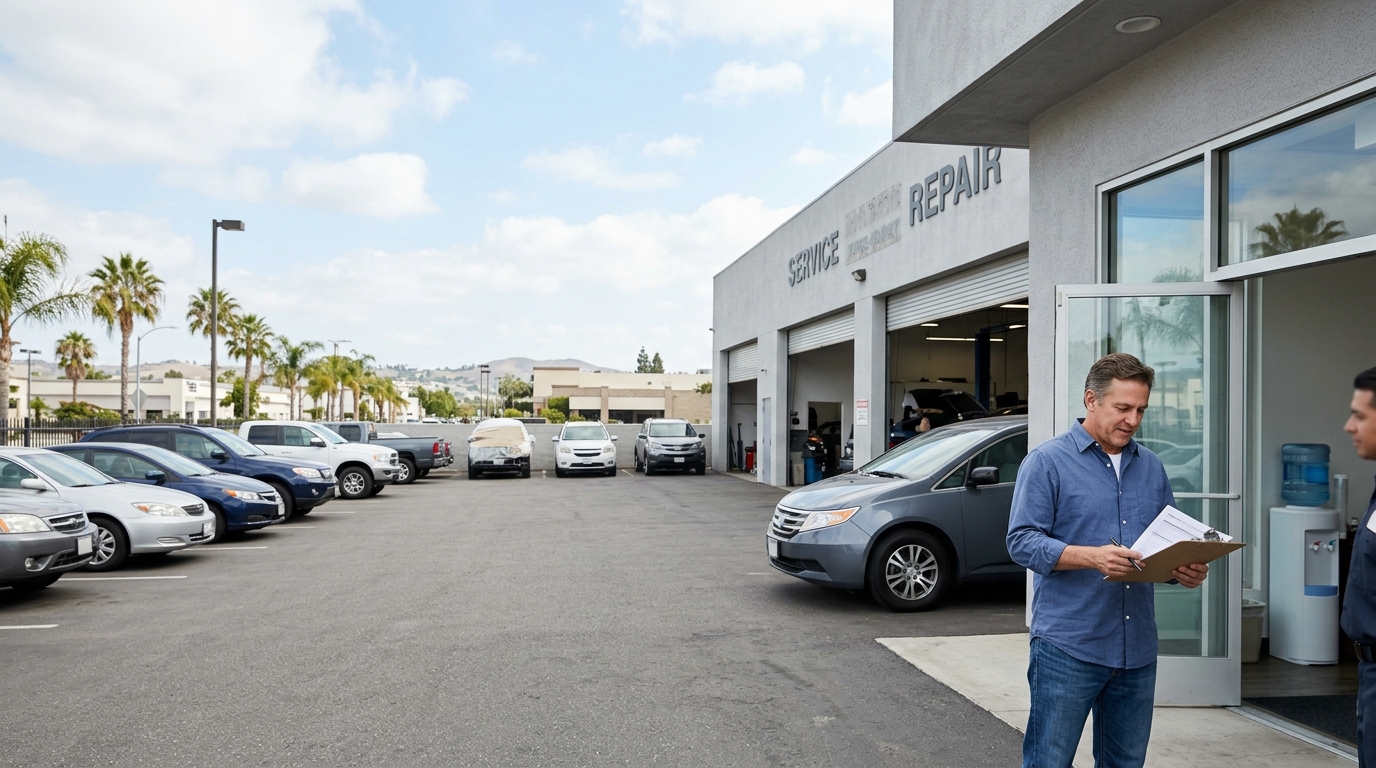
Because these technologies depend on properly functioning components, some ordinary vehicle repairs can affect their performance. A damaged bumper, replaced windshield, misaligned camera, or improperly installed sensor may interfere with the system’s ability to recognize hazards.
Windshield Replacement and Camera Calibration
Many vehicles place forward-facing cameras near the rearview mirror. These cameras may support lane departure warnings, lane keeping assistance, traffic sign recognition, and collision avoidance functions.
When a windshield is replaced, the camera may require calibration according to the manufacturer’s specifications. Requirements vary by vehicle, and some repairs may require additional diagnostic procedures.
Drivers should ask the repair facility whether calibration is necessary and request documentation of any required work. If the dashboard displays a warning after the repair, the issue should be investigated rather than ignored.
A vehicle may appear to drive normally even if a camera-based feature is unavailable or not operating as intended. Proper inspection is therefore important after repairs that affect a sensor’s position or field of view.
Bumper Repairs and Radar Sensors
Radar sensors may be positioned behind a bumper, grille, or exterior panel. A collision, replacement part, aftermarket modification, or incorrect installation may affect the sensor’s alignment or operation.
After a front-end or rear-end collision, drivers should not assume that every safety feature remains functional simply because the vehicle starts and drives normally. A qualified repair facility should inspect the relevant systems and follow the manufacturer’s procedures.
This is especially important when the vehicle displays warnings related to collision avoidance, adaptive cruise control, parking assistance, or blind-spot monitoring. Proper repairs can help identify problems before the driver relies on the affected feature again.
Software Updates and Diagnostic Warnings
Software influences how ADAS features interpret sensor information and respond to hazards. Manufacturers may issue software updates, technical service procedures, or recalls that address specific safety concerns.
Drivers should pay attention to dashboard messages and notices from the manufacturer. If a system repeatedly disengages or displays a malfunction warning, the cause may involve an obstructed sensor, environmental conditions, maintenance needs, or a component failure.
Not every warning indicates a serious defect, but persistent or unexplained warnings deserve attention. Consult the owner’s manual and arrange an inspection when necessary.
Common ADAS Limitations That California Drivers Should Know
Although advanced driver assistance systems can help reduce certain risks, their effectiveness depends on the circumstances. Recognizing common limitations can help drivers avoid excessive confidence in the technology.
Poor Weather and Reduced Visibility
Rain, fog, dust, road spray, and strong glare can interfere with sensor performance. Camera-based systems may have difficulty identifying lane markings when visibility is poor, while dirty or obstructed sensors can affect detection.
California drivers encounter different weather conditions across the state, including coastal fog, heavy rain during storms, dust in inland areas, and intense sunlight. A system’s performance in clear daylight should not be assumed to remain identical in every environment.
Drivers should reduce speed when conditions require it, increase following distance, and remain prepared to take control. If a vehicle reports that a safety feature is temporarily unavailable, motorists should follow the manufacturer’s instructions instead of attempting to force the feature to operate.
Construction Zones and Unclear Lane Markings
Construction zones can create complicated road layouts, especially when temporary lines conflict with older markings. Lane-centering systems may struggle to identify the correct path, and steering assistance may not respond as expected when the road changes suddenly.
Drivers must follow temporary traffic signs, barriers, flaggers, and lawful directions. They should be particularly cautious when approaching road crews, merging traffic, narrow lanes, or abrupt detours.
A vehicle’s technology cannot replace the driver’s responsibility to understand the road and react to changing conditions.
Unexpected Objects and Vulnerable Road Users
Pedestrians, cyclists, motorcyclists, animals, and debris can present difficult detection challenges. Although some systems are designed to recognize particular road users, performance varies by model and operating conditions.
In busy California neighborhoods, drivers should slow down near crosswalks, schools, shopping areas, and intersections where people may enter the roadway. Before turning or reversing, they should check carefully for pedestrians and cyclists.
No driver should assume that a vehicle’s emergency braking feature will recognize every person or object in time to prevent a collision.
Driver Overconfidence and Distraction
One of the most important risks associated with ADAS is the possibility that drivers become overly confident in the technology. When a vehicle adjusts speed and provides steering assistance, the experience may feel more automated than it actually is.
That impression can encourage drivers to look away from the road, use a phone, or react more slowly to unexpected events. A safety system may work well in routine traffic but encounter a situation that requires immediate human judgment.
Drivers should remain attentive whenever the vehicle is moving. Assistance features should never be used as a justification for texting, reading messages, watching videos, or performing other distracting activities.
Sensor Obstruction and Damage
Mud, snow, road grime, stickers, accessories, or physical damage can interfere with the operation of cameras and sensors. Depending on the vehicle, the system may warn the driver that a component is blocked or may have reduced performance without providing an obvious indication of every limitation.
Owners should consult the owner’s manual to identify sensor locations and approved cleaning procedures. After an impact, even when exterior damage appears minor, drivers should consider whether inspection is necessary if an ADAS feature behaves differently.
Proper maintenance cannot eliminate every technical limitation, but it can help prevent avoidable performance problems.
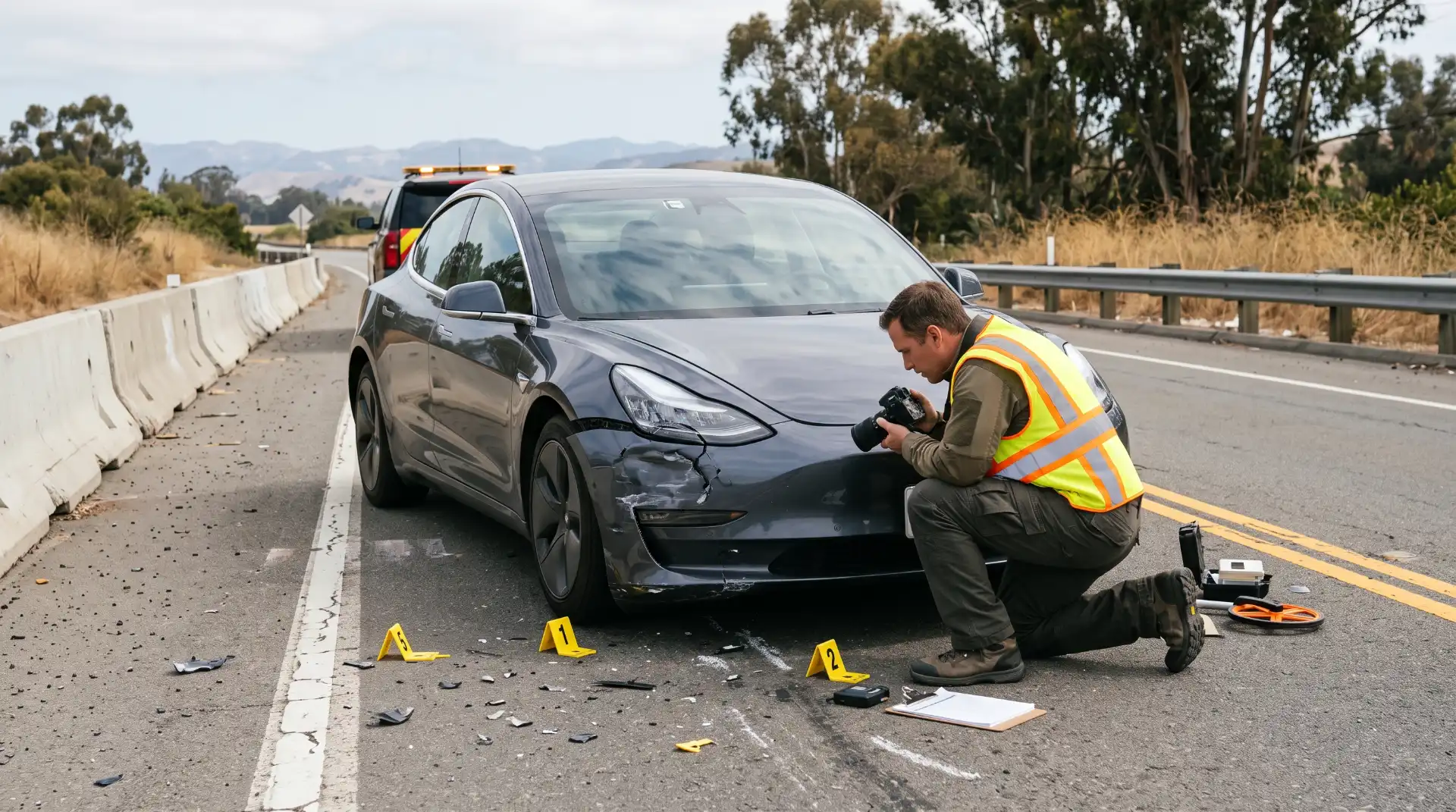
Who May Be Liable When an ADAS-Equipped Vehicle Crashes in California?
When a collision involves advanced driver assistance technology, the presence of that technology does not automatically establish who is responsible. Liability depends on the facts, the applicable law, the conduct of the parties, and the evidence available.
An investigation may need to consider whether a driver acted negligently, whether a vehicle component was defective, whether a repair was performed incorrectly, or whether another motorist contributed to the collision. In some cases, several factors may have played a role.
Driver Negligence and Responsibility
Drivers generally remain responsible for operating their vehicles safely, even when assistance features are active. A motorist who fails to observe traffic, follows too closely, ignores a warning, or makes an unsafe lane change may be found negligent if that conduct contributes to a crash.
For example, a driver using adaptive cruise control might assume the vehicle will automatically stop for every obstacle. If the system does not recognize a hazard, the driver may still need to respond to the traffic conditions and take appropriate action.
The legal analysis depends on the specific circumstances. Activating a safety feature does not automatically establish negligence, and the presence of driver assistance technology does not automatically excuse a driver’s conduct.
California motorists should understand the operating limits of their vehicles and avoid treating automated assistance as a substitute for reasonable care.
Vehicle Manufacturer Liability
A vehicle manufacturer or component supplier may face a product liability claim if a legally recognized defect caused or contributed to an injury. Depending on the circumstances, an investigation may examine a braking system, camera, radar sensor, software-related issue, or inadequate warning about a system’s limitations.
However, a collision does not automatically prove that a vehicle was defective. ADAS features have defined operating conditions, and crashes can occur even when equipment functions as designed. Establishing a product liability claim requires evidence supporting the applicable legal theory and a connection between the alleged defect and the injury.
Technical evidence may be particularly important when the claim concerns how a system detected a hazard, interpreted sensor information, or responded immediately before the collision.
Repair Shops and Calibration Providers
A repair shop may become relevant to an investigation if its work was negligent and contributed to the accident. For instance, a windshield replacement may require camera calibration, while bumper repairs may affect radar sensors.
If required procedures were omitted or completed incorrectly, investigators may need to determine whether the repair affected the system and whether that effect contributed to the collision.
The existence of a repair error alone does not establish liability for a subsequent crash. The relevant questions include what work was required, what the repair facility actually performed, whether the system was functioning properly afterward, and whether the alleged error caused harm.
Drivers can help preserve important information by keeping repair invoices, diagnostic reports, calibration records, and communications about warning messages.
Other Drivers and Third Parties
Another motorist may be responsible for a collision involving an ADAS-equipped vehicle. A driver who runs a red light, makes an unsafe turn, or changes lanes without checking may contribute to an accident regardless of the safety technology installed in the other vehicle.
California generally follows a comparative negligence framework, under which responsibility can be allocated among parties according to their respective fault. The effect on compensation depends on the circumstances and applicable law.
For example, one driver might make an unsafe lane change while another driver fails to react appropriately. An investigation may need to examine the conduct of both motorists rather than focusing exclusively on the technology.
The central point is that the presence of ADAS does not determine fault by itself. Responsibility must be assessed using the available evidence and the law applicable to the case.
What Evidence Matters After an ADAS-Related Accident?
A collision involving driver assistance technology may require a more detailed investigation than a case involving only visible vehicle damage. Investigators may need to understand what the driver was doing, which systems were active, whether warnings appeared, and whether a technical problem affected the vehicle’s response.
Photographs of the scene can help document road markings, traffic signs, weather, vehicle positions, and visible damage. Witness statements and available video footage may provide additional information about the events immediately before the collision.
Vehicle diagnostic information may also be relevant. Depending on the model, a vehicle may store fault codes, system status information, or event-related data. However, not every vehicle records the same information, and the available data may not provide a complete account of what happened.
Repair and maintenance records can help establish whether the vehicle recently underwent windshield replacement, collision repairs, sensor calibration, or software updates. If a safety feature began behaving differently after service, documentation of the timing may be useful.
Drivers should avoid assuming that a dashboard warning or a single electronic record proves the cause of a crash. Technical evidence must be interpreted in context, and different sources may need to be considered together.
If a serious collision may involve a system malfunction, preserving relevant records and avoiding unnecessary changes to the vehicle may be important. Owners should consider obtaining professional advice before authorizing work that could alter or destroy potentially relevant evidence.
What California Drivers Should Do After an ADAS-Related Collision
Safety and medical needs come first after any collision. If someone may be injured, seek emergency assistance and follow instructions from responders. Move to a safe location when possible without creating additional danger.
Once immediate safety concerns have been addressed, document the incident as carefully as circumstances allow. Photographs of the vehicles, roadway, traffic signs, lane markings, and surrounding conditions can help preserve useful information.
If an assistance system was active, make a factual note of which feature was being used and what occurred before the collision. Record any warning messages, unexpected braking, steering inputs, or system disengagements. These observations can guide a later investigation, but they should not be treated as a definitive technical diagnosis.
Exchange required information with the other parties and report the accident to law enforcement when required or appropriate. Notify your insurer according to the policy’s reporting requirements, and retain copies of medical records, repair estimates, towing receipts, and communications about the vehicle.
If a malfunction is suspected, tell the repair facility about the concern and ask whether diagnostic information can be preserved. When a collision causes serious injuries or substantial property damage, a qualified California attorney may help explain the available legal options and whether technical evidence should be secured.
Avoid making unsupported public claims about fault or the cause of a malfunction before the facts are established. A clear record of what you observed is generally more useful than speculation about what the vehicle’s software or sensors did.
Buying a Vehicle With ADAS in 2026: What Should You Check?
California buyers considering a new or used vehicle should evaluate driver assistance features alongside reliability, crash protection, insurance costs, and maintenance requirements.
Start by confirming which features are included in the specific make, model, model year, and trim level. Similar marketing names can describe systems with different capabilities, and a feature offered on one version of a vehicle may be unavailable on another.
Review the owner’s manual before purchasing when possible. Look for information about operating speed limits, road types, weather restrictions, driver monitoring, and circumstances in which the system may disengage.
A test drive can also help you understand the interface, although you should never deliberately create a dangerous situation to test an emergency feature. Ask the dealer to explain the system’s normal operation and limitations under safe conditions.
Independent safety evaluations are another useful resource. The Insurance Institute for Highway Safety’s vehicle ratings provide information that can help consumers compare crash protection and available safety technologies.
Buying a vehicle with advanced driver assistance technology involves more than comparing safety features and prices. Buyers should also understand the paperwork associated with vehicle ownership and ensure that title and lien records are handled correctly. Read our guide to California electronic lien and title changes in 2026 to learn more about these ownership-related requirements.
Buyers should also check whether the vehicle has outstanding recalls. The NHTSA recall lookup tool allows consumers to search using a vehicle identification number, or VIN.
Before purchasing a used vehicle equipped with advanced driver assistance systems, California consumers should review the purchase agreement, inspect the vehicle, and understand their contractual rights. Cancellation rights depend on the transaction and applicable law, so buyers should not assume every purchase includes a general three-day return period. For additional information, see our article on California’s three-day used car cancellation right.
Finally, consider the cost of ownership. Advanced cameras, radar sensors, and specialized calibration procedures can make some repairs more expensive than expected. Obtaining insurance estimates and asking about common repair requirements can help buyers evaluate the financial implications before committing to a vehicle.
ADAS Maintenance Tips for California Vehicle Owners
Keeping driver assistance systems in good condition requires attention to both ordinary maintenance and the technology’s specific requirements.
First, keep the windshield, camera areas, and relevant exterior sensor locations clean according to the manufacturer’s instructions. Avoid placing stickers, accessories, or other objects where they may obstruct cameras or sensors.
Second, ask about calibration after repairs involving the windshield, bumper, suspension, or other components that may affect sensor positioning. Requirements vary by vehicle, so the repair facility should consult the appropriate manufacturer procedures rather than assume calibration is unnecessary.
Third, pay attention to warning messages and changes in system behavior. If a feature repeatedly disengages, provides unusual alerts, or reports a malfunction, arrange an inspection when appropriate. Do not assume that an unfamiliar warning will disappear permanently after restarting the vehicle.
Fourth, retain documentation of repairs, software updates, recalls, and calibration work. These records can help with future maintenance and may be relevant if a technical issue develops.
Finally, review safety recall information periodically. If a recall applies to your vehicle, follow the manufacturer’s instructions and arrange the required remedy.
Good maintenance cannot guarantee that an ADAS feature will prevent every collision. It can, however, help identify problems and reduce the risk of relying on a system that is not functioning as intended.
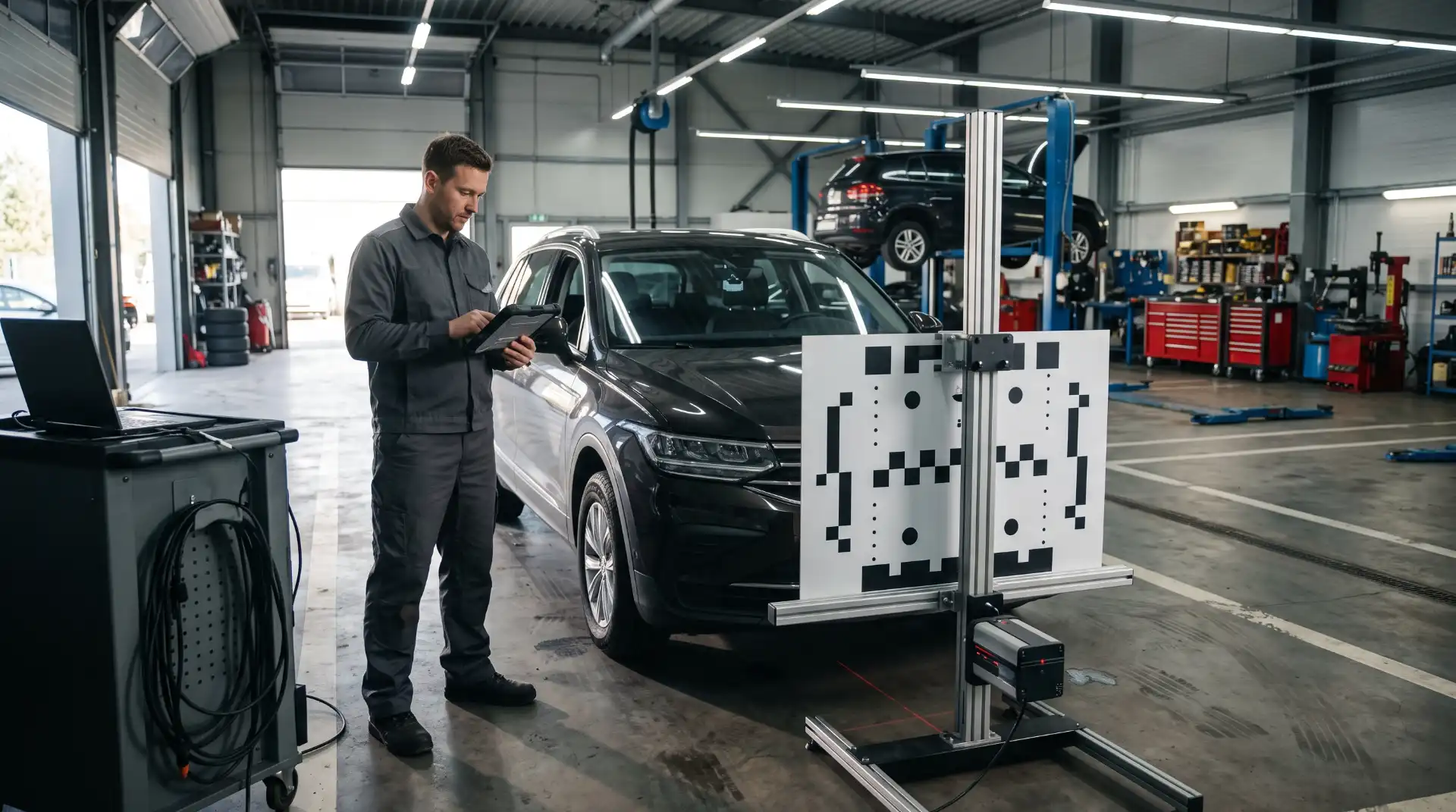
How ADAS Technology May Change Vehicle Safety and Liability
Driver assistance systems are likely to continue developing as automakers improve sensors, software, computing power, and vehicle connectivity. Newer systems may combine multiple functions into more integrated assistance packages, while manufacturers continue working to improve object detection and driver monitoring.
These developments may offer important safety benefits, but they also make clear communication increasingly important. Drivers need to understand when a feature is available, what it can detect, and when they must take control.
A system that encourages excessive confidence can create risks even when its underlying technology is sophisticated. Clear warnings, understandable controls, appropriate driver monitoring, and realistic explanations of limitations all matter.
Regulatory oversight also plays an important role. NHTSA investigates potential vehicle safety defects and oversees federal vehicle safety requirements and recalls. California motorists can consult official safety resources when researching a vehicle’s equipment or a reported defect.
As vehicles become more software-dependent, investigations may increasingly involve diagnostic records, software versions, component condition, and manufacturer service procedures. Accessing and interpreting that evidence can require specialized technical expertise.
For drivers, the practical lesson remains straightforward: advanced features should be evaluated according to their actual capabilities, not their marketing descriptions. Responsible driving, proper maintenance, and attention to road conditions remain essential even as technology improves.
Frequently Asked Questions About ADAS in California
Are advanced driver assistance systems required in every California vehicle?
No. Not every ADAS feature is required on every vehicle driven in California. Federal vehicle safety standards establish requirements for particular equipment, while many assistance features are offered as standard or optional equipment depending on the vehicle. Requirements can change, so consumers should check current regulations and the specifications for the particular model.
Can automatic emergency braking prevent every collision?
No. Automatic emergency braking is designed to help prevent or reduce the severity of certain collisions. Its performance depends on the system, the hazard, speed, visibility, sensor condition, and other circumstances. Drivers should remain attentive and prepared to brake.
Who is responsible if an ADAS feature fails during a crash?
Responsibility depends on the evidence and applicable law. The driver, manufacturer, component supplier, repair facility, or another road user may be relevant to an investigation. A malfunction alone does not automatically prove legal liability; investigators must consider causation and the circumstances of the collision.
Can a windshield replacement affect driver assistance technology?
Yes. Some vehicles require calibration of a forward-facing camera after windshield replacement. Requirements vary, so drivers should ask the repair facility whether calibration or other diagnostic procedures are necessary and retain documentation of the work.
Does Level 2 driving automation mean a car is self-driving?
No. Level 2 systems can assist with steering and acceleration or braking simultaneously, but the driver must continue supervising the driving task and remain ready to intervene. Always check the vehicle’s manual for the specific operating conditions and requirements.
What should I do if I suspect an ADAS malfunction caused my accident?
Prioritize safety and medical care, document the collision, retain repair and maintenance records, and report the incident as appropriate. If the collision caused serious injuries, consider consulting a qualified California attorney who can assess whether technical investigation or evidence preservation may be necessary.
Are ADAS-equipped vehicles more expensive to repair?
They can be, depending on the vehicle and the type of damage. A repair involving cameras, radar sensors, specialized components, or required calibration may cost more than a comparable repair on a vehicle without those systems. Actual costs vary by make, model, location, parts availability, and repair procedures.
Conclusion: Technology Helps, but Driver Awareness Still Matters
Advanced driver assistance systems are an increasingly important part of modern vehicle safety. Automatic emergency braking, lane keeping assistance, adaptive cruise control, and blind-spot monitoring can help drivers recognize certain hazards and respond to developing situations.
However, these systems have limitations. Their performance can be affected by road conditions, weather, sensor damage, software, and the type of hazard involved. Drivers must understand how their vehicle’s features operate and remain attentive even when assistance systems are active.
For California motorists, proper maintenance and informed vehicle ownership are especially important. Sensor calibration, repair documentation, recall checks, and a clear understanding of system limitations can help owners make better decisions.
When a collision occurs, determining responsibility may require examining driver conduct, vehicle condition, repair history, and the performance of relevant safety systems. No single warning light or automated feature automatically establishes fault.
By combining responsible driving with a realistic understanding of vehicle technology, California motorists can use ADAS more effectively while recognizing that human attention and sound judgment remain essential to road safety.
Disclaimer: This article is for general informational purposes only and does not constitute legal advice. Vehicle safety requirements and liability rules may change. Consult qualified professionals for guidance about a specific incident.