California expanded its Slow Down and Move Over law in 2026, giving roadside protection to more than police cars, tow trucks, and Caltrans vehicles. Drivers approaching certain stationary vehicles must now change into a nonadjacent lane when it is practical and safe. If changing lanes is unsafe or impractical, they must slow to a reasonable and prudent speed for the conditions.
The biggest change is that the rule can now apply when an ordinary passenger vehicle is stopped alongside the highway and displaying flashing hazard lights or another warning device. The expansion took effect January 1, 2026 under Assembly Bill 390.
What Changed Under California’s 2026 Law
California already required motorists to use additional caution around certain stationary emergency vehicles and tow trucks. Assembly Bill 390 expanded Vehicle Code Section 21809 to cover a broader range of roadside situations.
The California DMV’s 2026 new laws overview explains that the requirement now includes marked highway maintenance vehicles and other stationary vehicles displaying flashing hazard lights or another warning device.
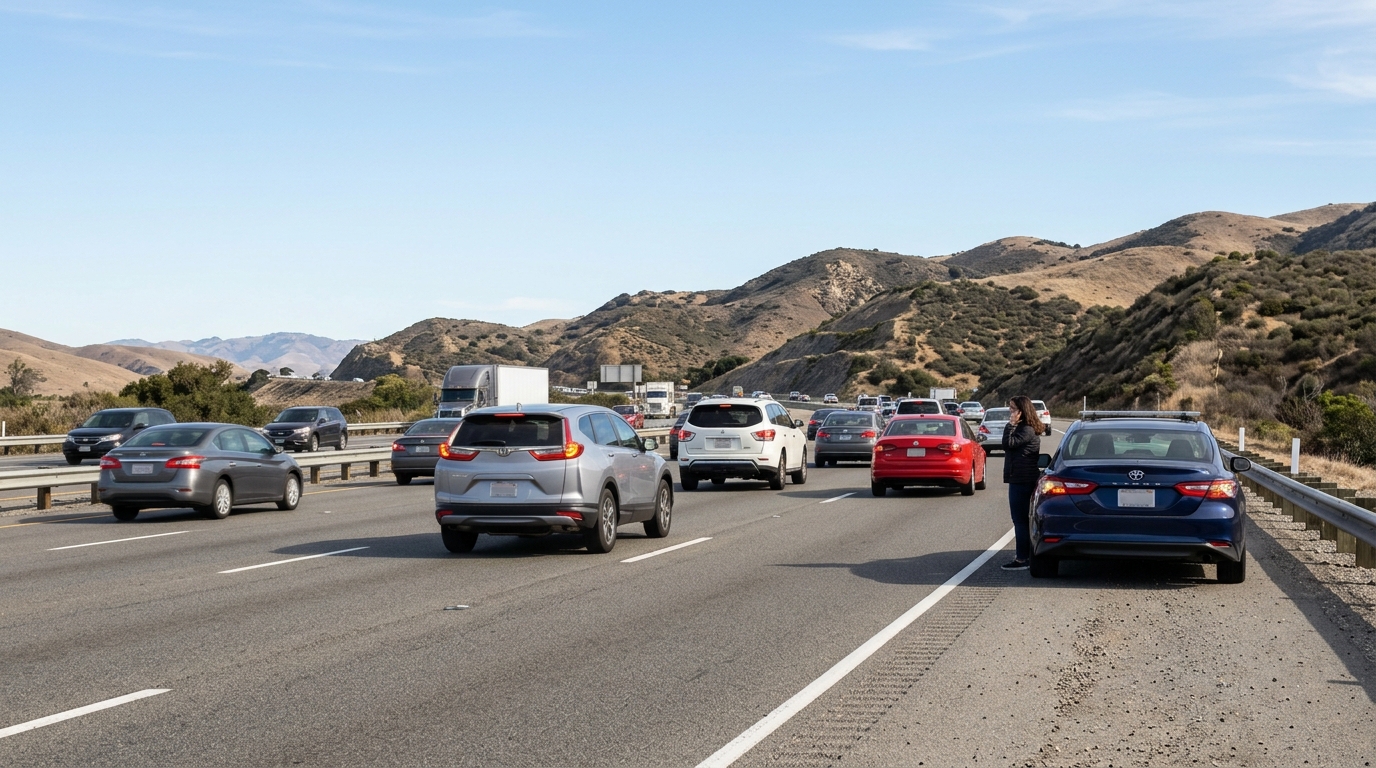
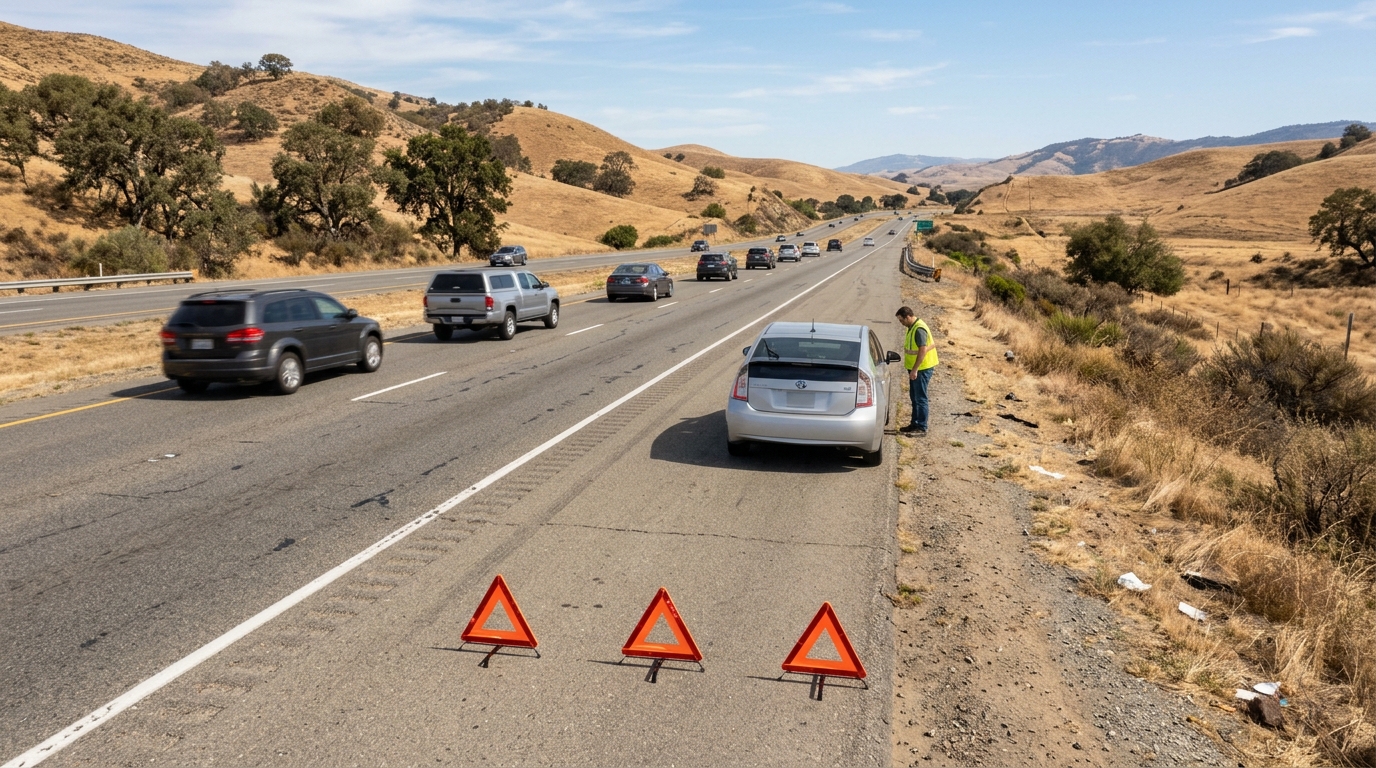
That means a private vehicle experiencing a flat tire, mechanical failure, collision, or another roadside problem may fall within the law when it is stationary beside the highway and displaying the required warning signal.
Examples of warning devices specifically identified in the statute include flashing hazard lights, cones, flares, and retroreflective devices.
The change broadens the roadside safety zone drivers should recognize. Motorists can no longer assume that the Move Over requirement matters only when they see a police cruiser or tow truck.
Drivers Must Move Over When It Is Safe
The law does not tell motorists to make a sudden or dangerous lane change whenever they see a stopped vehicle. Instead, drivers must approach with due caution and consider traffic and roadway conditions.
Under California Vehicle Code Section 21809, a driver approaching a covered stationary vehicle should move into an available lane that is not immediately adjacent to the stopped vehicle when the maneuver is practical, lawful, and safe.
On a freeway with several lanes traveling in the same direction, that often means leaving the lane closest to the shoulder before passing the stopped vehicle.
Drivers should check mirrors, observe surrounding traffic, signal, and move over only when enough space exists. Abruptly cutting into another lane can create a different hazard and is not what the law requires.
What If A Driver Cannot Change Lanes?
Sometimes moving over is not practical. Heavy traffic may block the adjacent lane. A road may have only one lane traveling in that direction, or another vehicle may already occupy the space a driver would need to enter.
In those situations, the law provides another option. The driver must slow to a reasonable and prudent speed that is safe for the existing weather, road, vehicle, and pedestrian conditions.
The statute does not set one specific reduced speed that applies in every situation. A safe speed depends on what is happening on the road at that moment.
The Rule Now Covers More Roadside Vehicles
Several types of stopped vehicles can trigger the requirement. Authorized emergency vehicles displaying emergency lights remain covered, as do stationary tow trucks displaying flashing amber warning lights.
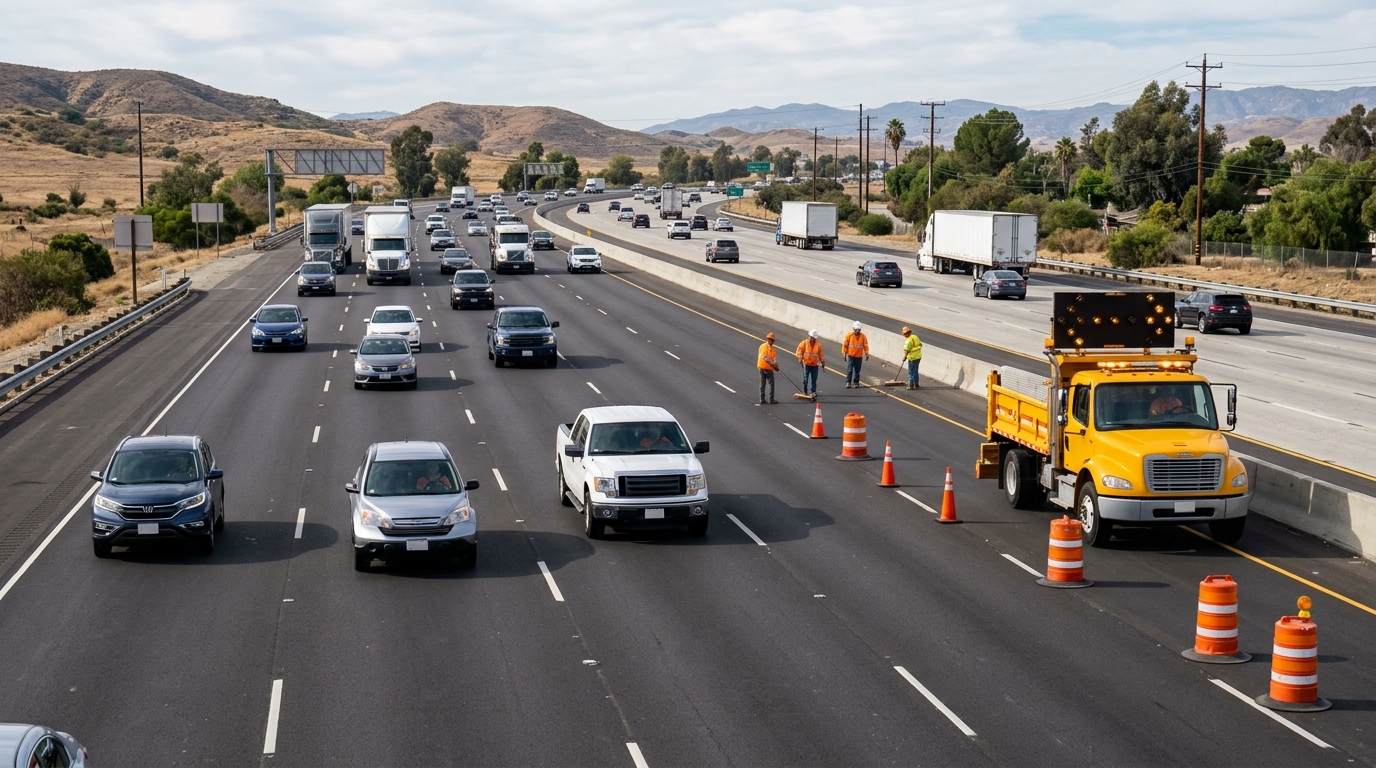
Marked highway maintenance vehicles displaying flashing amber lights are also included. The 2026 law broadened this part of the statute beyond vehicles operated specifically by Caltrans.
A highway maintenance vehicle may be operated by the California Department of Transportation, a county, municipality, another political subdivision, or a contractor working for one of those public entities.
The California Highway Patrol’s summary of 2026 public safety laws highlights another important part of AB 390. The rule now covers stationary vehicles using flashing hazard lights or roadside warning devices such as cones and road flares.
For drivers, the easiest approach is to treat visible roadside warning equipment as a signal to increase space and reduce risk.
The Law Is Not Limited To Freeways
The word “highway” sometimes causes confusion because many people use it to mean a major freeway or state route. California’s Vehicle Code uses a broader definition.
Under Vehicle Code Section 360, a highway is a publicly maintained way or place open to public vehicular travel, and the definition expressly includes a street.
As a result, drivers should not assume the Slow Down and Move Over requirement matters only on major interstate highways. The circumstances described in Section 21809 can arise on other public roads as well.
Road layout still matters. On a narrow street or a road without another available lane in the same direction, slowing safely may be the practical response because moving into another lane is not possible.
Some Roadside Situations Are Excluded
The expanded law has boundaries. Section 21809 states that the requirement does not apply when the stationary vehicle is not adjacent to the highway or when a protective physical barrier separates the stopped vehicle from the highway.
For example, a disabled car located behind a substantial protective barrier presents a different traffic exposure from a vehicle sitting directly on the shoulder next to moving vehicles.
The presence of warning lights also matters for ordinary stationary vehicles. The 2026 expansion specifically refers to vehicles displaying flashing hazard lights or another warning device.
Drivers should still operate cautiously whenever they encounter roadside activity, even when the exact circumstances do not fall within this particular section of the Vehicle Code.
Why Roadside Space Matters
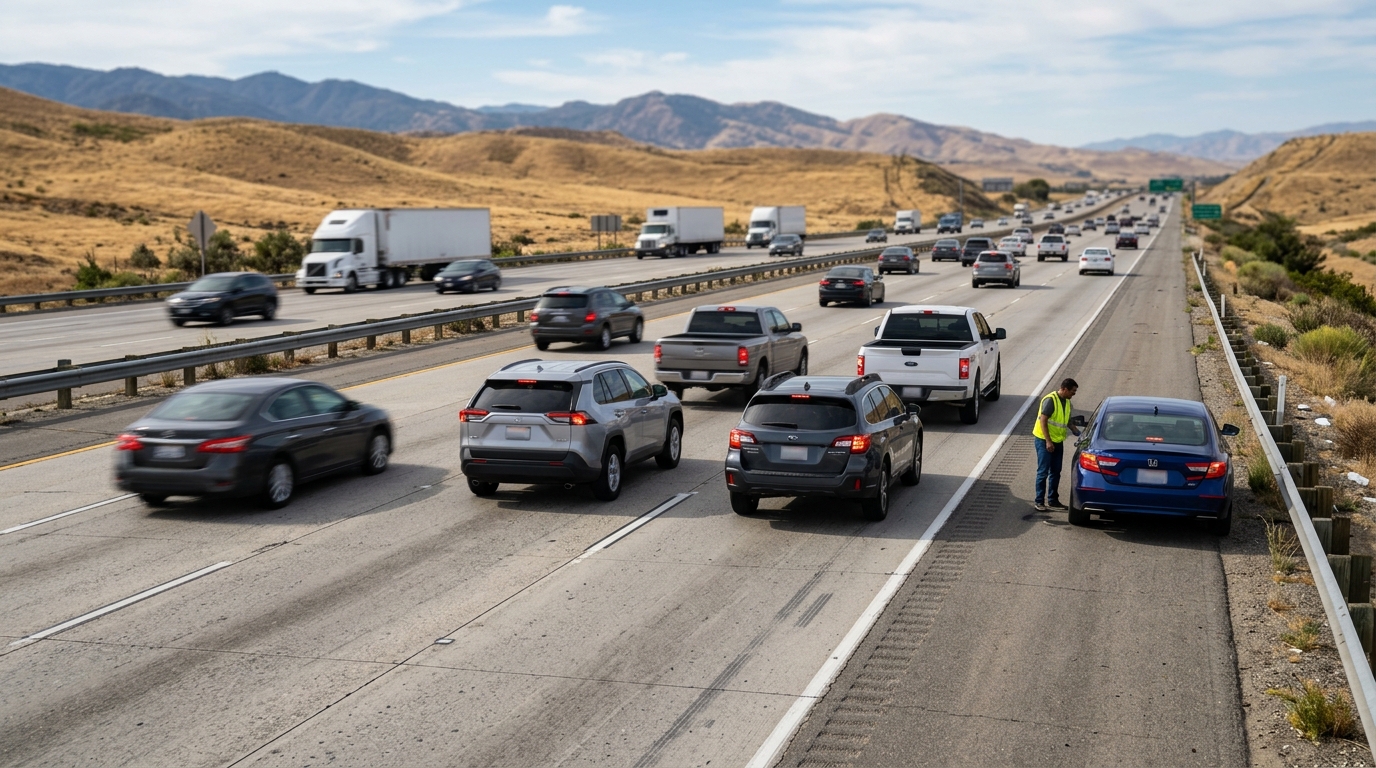
People standing beside disabled vehicles, tow operators, emergency personnel, and highway workers can be only a few feet from fast-moving traffic. Giving them another lane of space where possible reduces the number of vehicles passing immediately beside the roadside activity.
Caltrans continues to emphasize moving over and slowing down as part of its work zone safety guidance. The agency also advises motorists to remain alert, watch for workers, avoid unnecessary lane changes, allow additional following distance, and anticipate changes in traffic patterns.
Those habits are useful beyond construction zones. A stopped vehicle can appear with little warning after a breakdown or collision, particularly at night or during poor weather.
A Violation Can Result In An Infraction
California Vehicle Code Section 21809 classifies a violation of the Slow Down and Move Over requirement as an infraction. The statute provides for a fine of not more than $50.
The possibility of a citation is one reason to understand the rule, but roadside safety is the larger purpose of the change. AB 390 extends a familiar protection from professional roadside responders to ordinary drivers and passengers facing problems beside the road.
What California Drivers Should Remember
The expanded rule can be reduced to a few practical principles. When approaching a stationary emergency vehicle, tow truck, marked highway maintenance vehicle, or another stopped vehicle displaying hazard lights or warning devices, first recognize that people or equipment may be close to moving traffic.
When another lane is safely available, move out of the lane immediately next to the stopped vehicle. When changing lanes would be unsafe or impractical, reduce speed to a reasonable level for the current conditions.
Drivers should avoid abrupt steering or braking simply to comply. The statute itself requires motorists to consider safety and traffic conditions before changing lanes.
California’s 2026 expansion makes the Slow Down and Move Over rule relevant to many roadside situations that drivers encounter every day. A family car with a flat tire and flashing hazards may now call for the same basic response as a tow truck or maintenance vehicle: notice the hazard early, create space when safely possible, and slow down when moving over cannot be done safely.