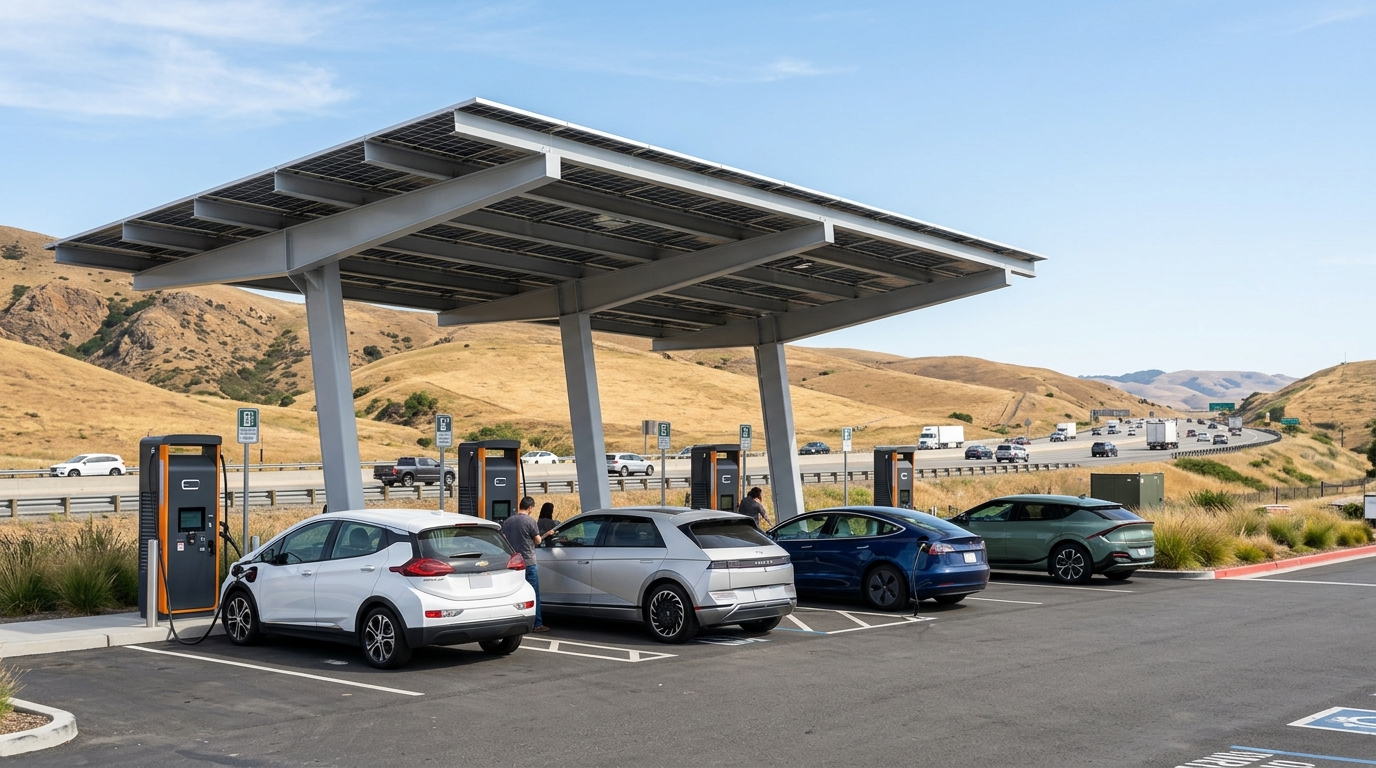
California is moving into another major phase of its electric vehicle charging buildout. In February 2026, the California Energy Commission opened a competitive funding round offering up to $79 million for publicly accessible, high-powered direct current fast charging stations. The funding comes through California’s National Electric Vehicle Infrastructure Formula Program, commonly known as NEVI.
The new round is called Solicitation 6 Community Charging, or GFO-25-603. It is aimed at supporting light-duty electric vehicle travel along major corridors. For drivers, the practical goal is straightforward: more places to fast charge during longer trips and while traveling between communities.
The $79 million figure is the amount available through the solicitation, not an announcement that all of the money has already been awarded. As of August 2026, the California Energy Commission lists the solicitation as active, with applications due October 16, 2026.
What the $79 Million NEVI Round Covers
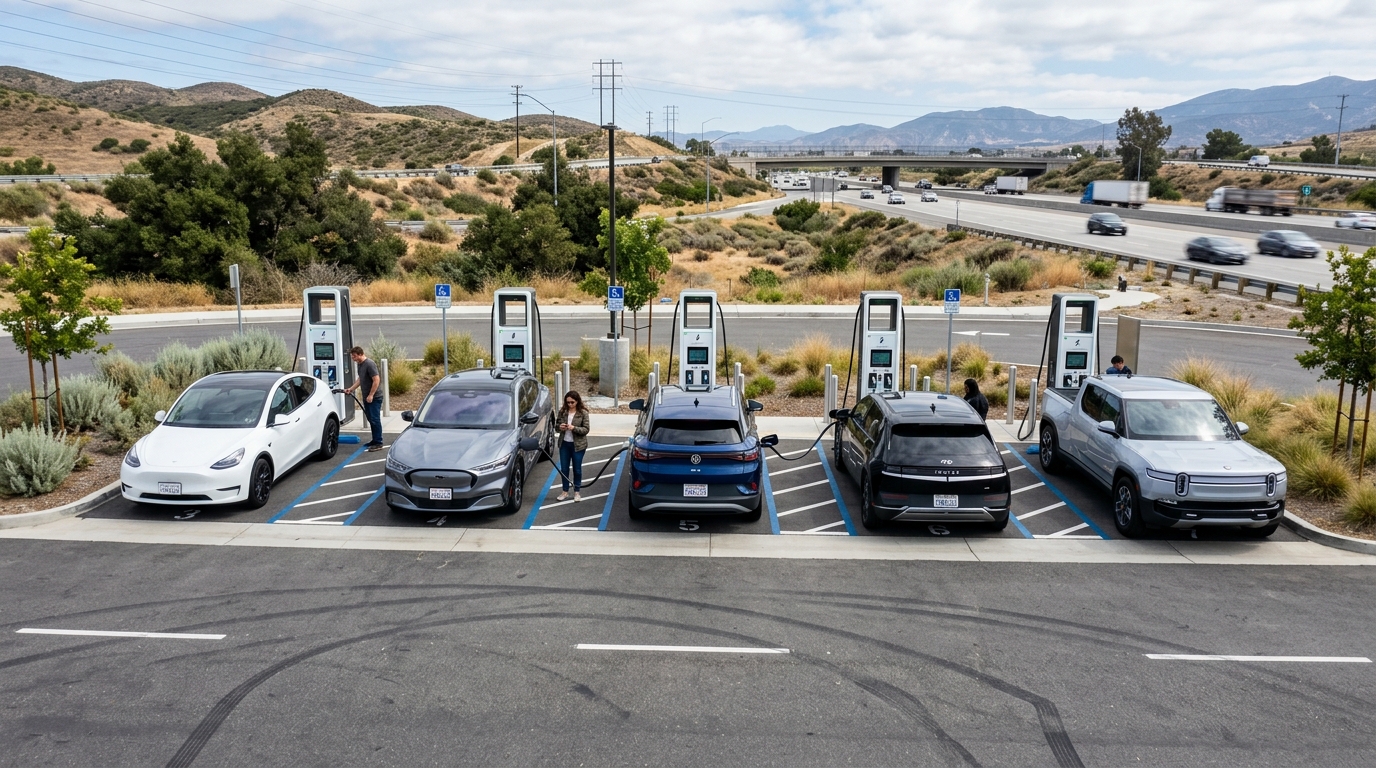
The California Energy Commission says the solicitation is designed to strategically deploy publicly accessible, high-powered DC fast chargers. Those chargers are intended to support light-duty EV travel along major corridors that fit federal NEVI requirements.
That makes this program different from a general rebate for installing a charger at a home, apartment building, or workplace. Although the round is called Community Charging, its purpose remains tied to California’s broader NEVI corridor network.
The official California Energy Commission NEVI Solicitation 6 page provides the current funding amount, application schedule, addenda, and program documents for GFO-25-603. It lists February 23, 2026, as the release date and October 16, 2026, at 11:59 p.m. as the submission deadline.
California’s Larger NEVI Charging Plan
The $79 million round sits within a much larger federal and state effort. According to the California Energy Commission, California is expected to receive $384 million over five years through the NEVI Formula Program.
California is implementing the program through a partnership between the California Energy Commission and Caltrans. The broader plan focuses on developing a highway charging network that can support long-distance electric vehicle travel.
The California Energy Commission’s federal EV infrastructure program says the statewide NEVI effort calls for at least four 150-kilowatt DC fast chargers at stations placed at least every 50 miles across approximately 6,600 miles of interstates, U.S. routes, and state routes.
Those targets explain why corridor placement matters. A fast charger that appears useful on a local map does not automatically serve the same role as a station positioned to close a gap in a long-distance travel network.
Where New Chargers May Be Located
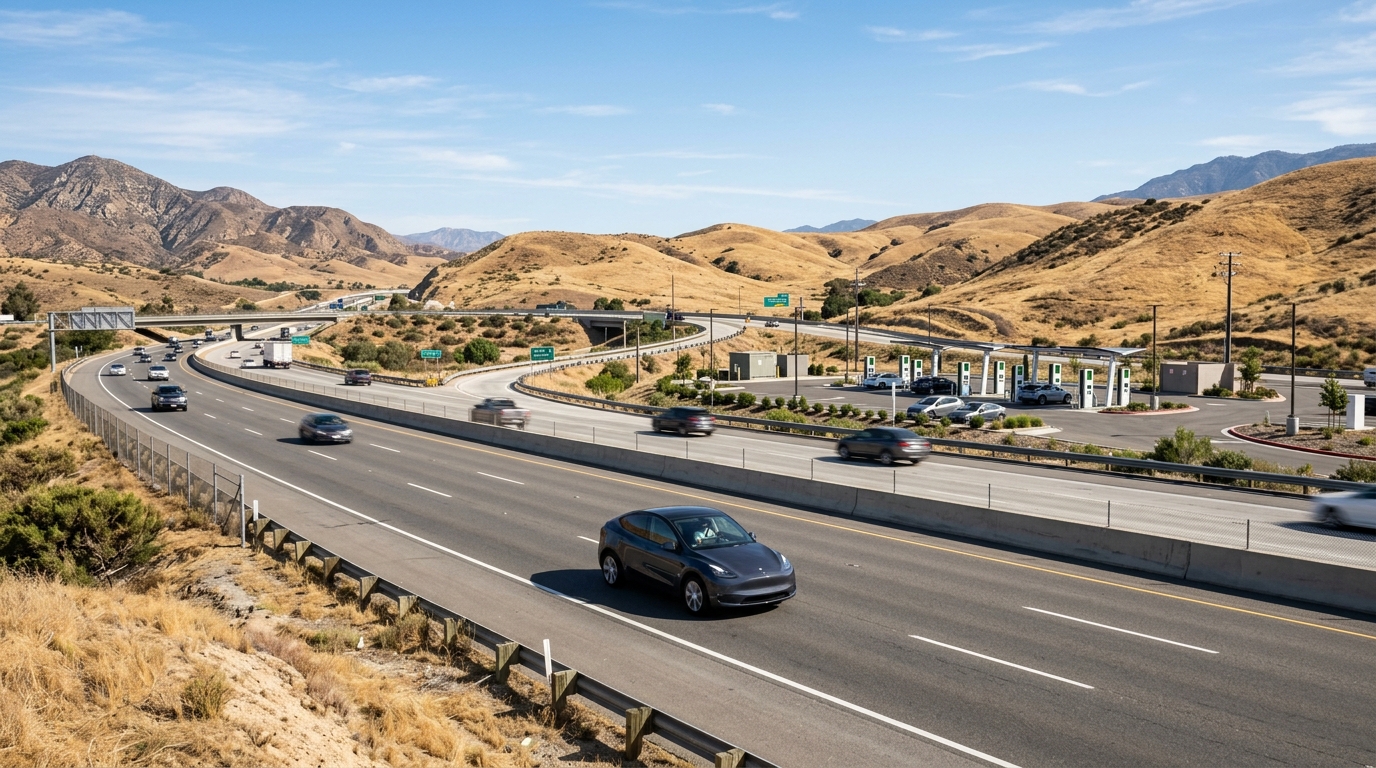
California’s NEVI planning is based on federally designated Alternative Fuel Corridors. The state also uses its own interactive mapping tools to show eligible routes, previous awards, current project regions, and charging locations.
The California Energy Commission updated its California NEVI Formula Program map in July 2026. The map includes Alternative Fuel Corridors eligible for the sixth funding round and existing or planned charging stations from earlier NEVI rounds.
The map is important because applicants cannot simply propose any location they choose. The program is structured around corridor needs and the federal requirements that govern NEVI funding.
The map also helps the public see how the program is developing over time. Drivers can view the difference between areas already covered by earlier funding rounds and corridors that remain relevant for future deployment.
What Community Charging Means For Drivers
For California EV owners, the most visible effect may eventually be more high-powered charging options along important travel routes. That could be especially useful for people who regularly drive between metropolitan areas, smaller communities, recreational destinations, and other parts of the state where charging choices may be more limited.
A larger corridor network can also make trip planning less dependent on a small number of charging locations. The value is not simply the number of plugs installed. Location, charging speed, reliability, access, and the ability to serve multiple vehicles all contribute to the usefulness of a public fast charging network.
However, a funding solicitation is only one stage in the process. The availability of up to $79 million does not mean new chargers immediately appear when the application period closes. Selected projects may still move through contracting, site preparation, utility coordination, permitting, construction, equipment installation, and commissioning.
For readers following the program, it is useful to distinguish between funding availability, project awards, construction, and operational charging stations. Those milestones can occur at different times.
Why DC Fast Charging Is The Focus
Different charging types serve different driving needs. Level 2 charging is useful when a vehicle can remain parked for an extended period, such as at a home, workplace, hotel, or destination. DC fast charging is designed for substantially faster energy delivery and plays a larger role in highway and long-distance travel.
That is why NEVI emphasizes high-powered DC fast charging. A corridor station needs to help drivers continue their trip without the lengthy stop that slower charging may require.
California’s broader federal EV infrastructure program also includes separate efforts for charger reliability and other charging needs. The state’s EV charging strategy is therefore not built around one funding program alone. NEVI is specifically an important part of the interstate and major-route charging network.
What To Watch Next In 2026
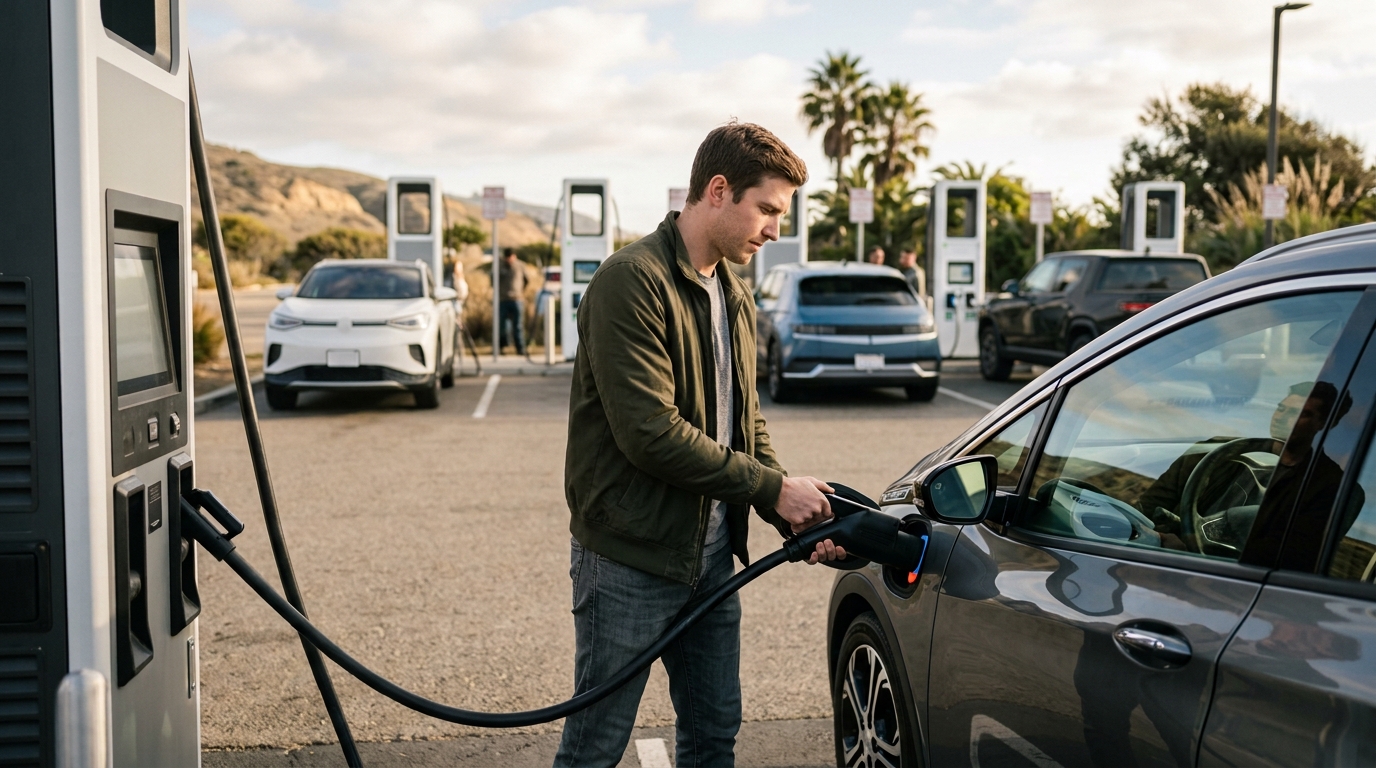
The immediate milestone for Solicitation 6 is the October 16, 2026, application deadline. After the competitive process advances, the next important information for drivers and communities may include which projects receive awards, where stations are planned, how many charging ports are proposed, and when construction schedules become available.
The California Energy Commission’s NEVI map is also worth watching. It was updated in July 2026 and already identifies existing or planned stations from the first three funding rounds while showing the corridors relevant to the sixth solicitation.
Future updates can provide a clearer picture of how California’s charging network is filling geographic gaps. They can also help drivers separate announced funding from stations that are actually open and available for charging.
A Significant But Still Developing Investment
California’s $79 million NEVI Community Charging solicitation represents a substantial current investment in public fast charging, but it is best understood as part of a longer infrastructure buildout.
The program is active, competitive, and focused on publicly accessible high-powered charging along major corridors. It builds on California’s wider NEVI plan, which is backed by hundreds of millions of dollars in federal formula funding and targets thousands of miles of major roads.
For California drivers, the story to watch is not only how much money is offered. The more meaningful measure may be where projects are selected, how quickly stations move from planning to construction, and whether the resulting network makes long-distance EV travel easier across the state.