Hybrid vehicles are taking a larger share of California’s new car market in 2026. Conventional hybrids accounted for 22.1 percent of statewide new vehicle registrations during the first half of the year, the highest share recorded in the California Auto Outlook data series. About 191,000 hybrids were registered through June, even as California’s overall new vehicle market declined.
The trend shows that the state’s changing vehicle market is about more than battery electric cars. Many California drivers are also choosing vehicles that combine gasoline engines with electric motors while avoiding the need to regularly plug into a charger.
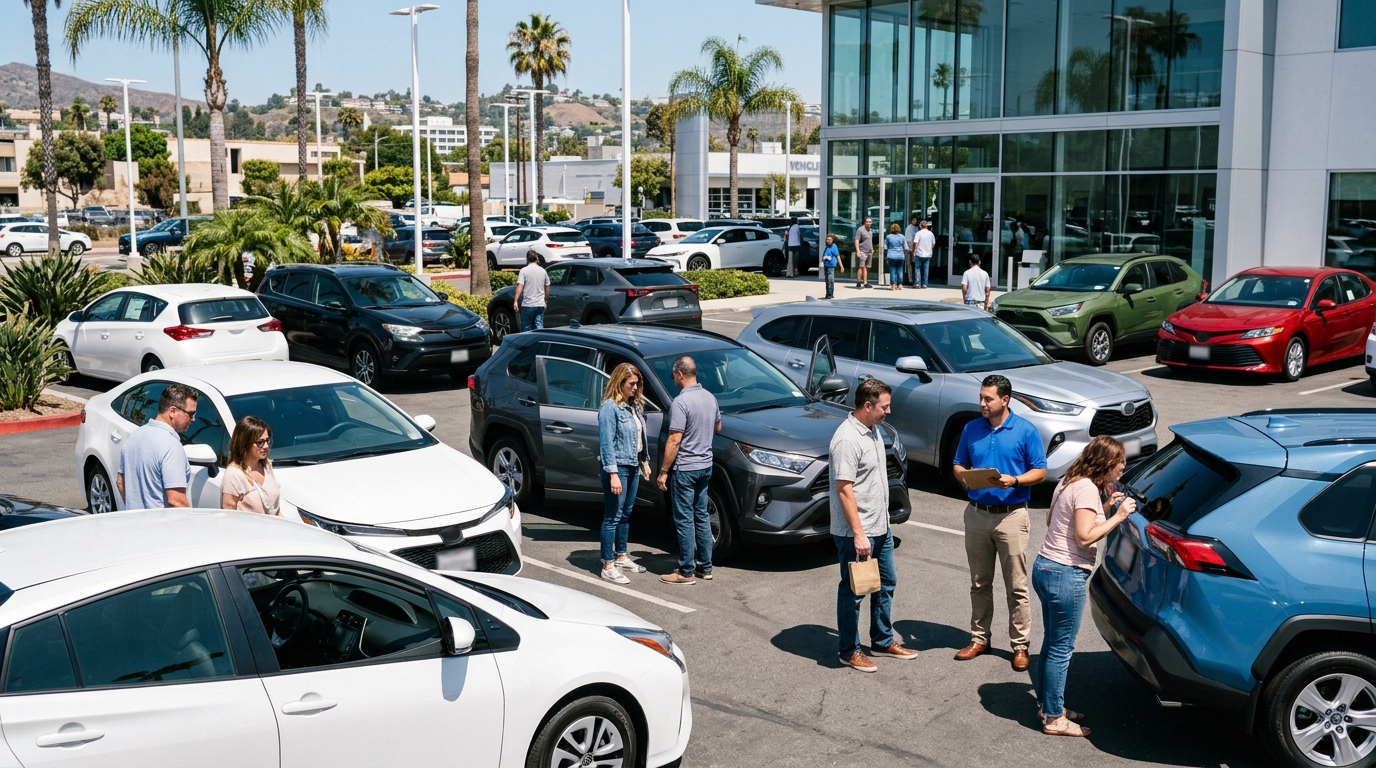
Hybrid Market Share Reached 22.1 Percent
The California New Car Dealers Association’s Q2 2026 Auto Outlook reported that hybrids represented 22.1 percent of California’s new vehicle market through June.
That is up from 19.5 percent for all of 2025. The longer trend is even more noticeable. Hybrid market share stood at 9.2 percent in 2022, increased to 11.1 percent in 2023, reached 14.8 percent in 2024, and then climbed to 19.5 percent in 2025.
The momentum also continued within 2026. Hybrids represented 20.9 percent of registrations during the first quarter and 23.2 percent during the second quarter.
The report’s hybrid category excludes plug-in hybrids and mild hybrids. That distinction matters because different automotive datasets may group electrified vehicles differently.
Hybrids Grew While The Overall Market Contracted
The rise in hybrid share occurred during a challenging period for California’s broader new vehicle market. A total of 864,848 new light vehicles were registered in California during the first six months of 2026, down 7.7 percent from the same period in 2025.
Passenger car registrations declined 12.7 percent, while light truck registrations fell 5.8 percent. California’s overall market decline was also larger than the 2.8 percent decrease reported nationally during the same period.
Against that backdrop, approximately 191,000 hybrid registrations represented a substantial portion of new vehicle activity.
Gasoline-only vehicles remained the largest powertrain category at 57.6 percent of the California market. However, the gap between gasoline vehicles and electrified alternatives has narrowed significantly compared with earlier years.
The California Auto Outlook reported that battery electric vehicles and fuel cell vehicles together represented 15.9 percent of registrations through June, while plug-in hybrids accounted for another 2.3 percent.
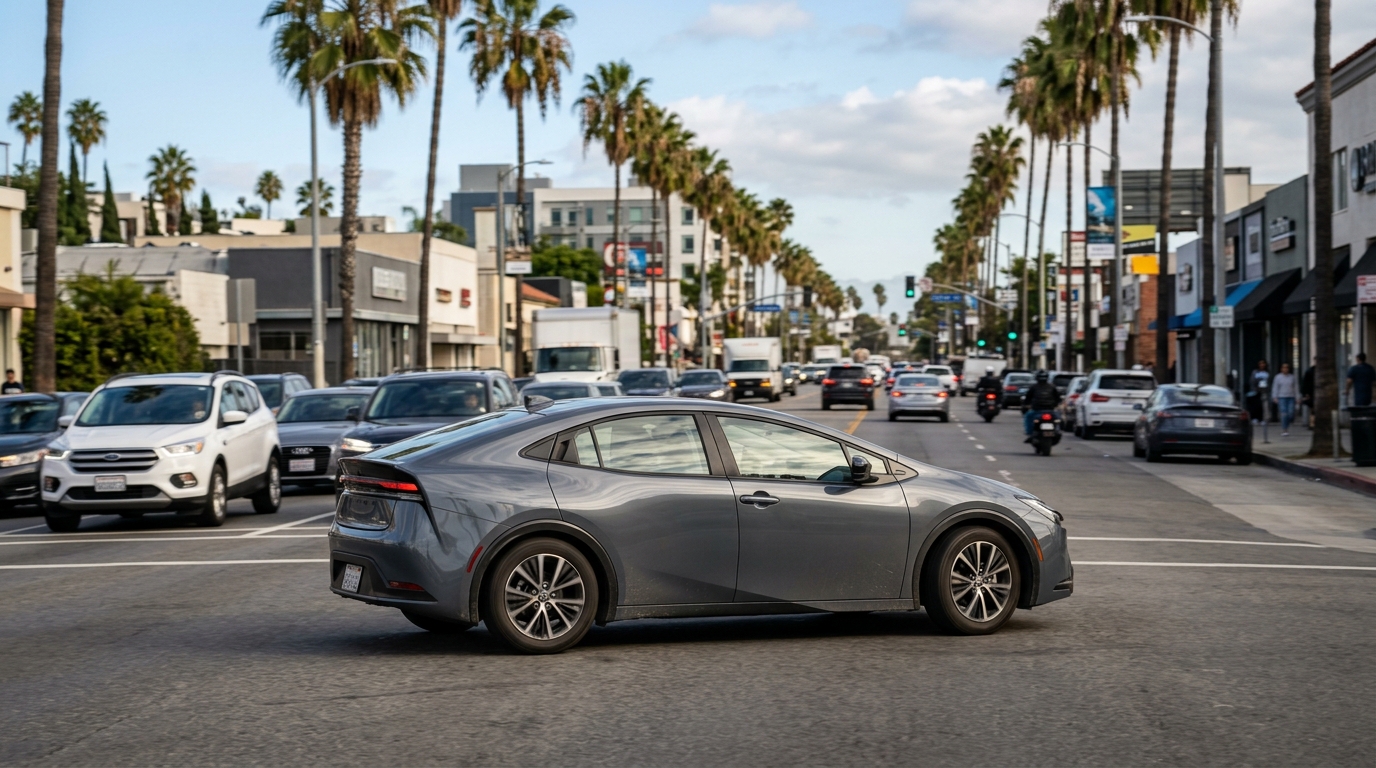
Why Conventional Hybrids Appeal To Some Drivers
A conventional hybrid combines an internal combustion engine with one or more electric motors and a battery. Unlike a plug-in hybrid or battery electric vehicle, a conventional hybrid does not need to connect to an external charging source.
The U.S. Department of Energy’s Alternative Fuels Data Center explains that hybrid electric vehicles use regenerative braking and the internal combustion engine to recharge their batteries.
That arrangement can improve fuel efficiency while preserving the fueling routine and driving range familiar to owners of conventional gasoline vehicles.
For some California buyers, that combination may make hybrids a practical middle ground. A driver can gain some benefits of electrification without planning charging stops or installing home charging equipment.
That does not mean a hybrid is automatically the right choice for every driver. Purchase price, annual mileage, fuel economy, vehicle size, financing costs, maintenance, and driving conditions can affect the value of one powertrain compared with another.
Several Popular Models Are Driving Hybrid Volume
California’s hybrid growth is spread across several major vehicle categories rather than being limited to one specialized model.
The Toyota Camry Hybrid was the highest-volume hybrid listed in the California Auto Outlook through June 2026, with 33,523 registrations. The Honda CR-V Hybrid followed with 18,712 registrations, while the Toyota RAV4 Hybrid recorded 13,320.
Other high-volume hybrids included the Honda Civic Hybrid at 10,188 registrations and the Honda Accord Hybrid at 10,120. The Toyota Sienna Hybrid, Toyota Corolla Hybrid, Toyota Grand Highlander Hybrid, Ford Maverick Hybrid, and Kia Sportage Hybrid also appeared among the state’s leading electrified models.
The range of body styles is significant. California shoppers can now find conventional hybrid systems in sedans, compact cars, crossovers, larger SUVs, minivans, and pickup trucks.
That wider selection gives consumers more opportunities to choose a hybrid without changing the type of vehicle they normally drive.
Hybrid And Plug-In Hybrid Data Are Different
Readers comparing California vehicle reports should pay attention to terminology. A conventional hybrid, a plug-in hybrid, and a battery electric vehicle operate differently and are not always grouped together in market reports.
A plug-in hybrid has a larger battery that can be charged using an external electricity source. It can generally travel some distance using electricity before operating more like a conventional hybrid.
California’s official zero-emission vehicle statistics use another classification system. The California Energy Commission’s ZEV dashboard includes battery electric vehicles, plug-in hybrid electric vehicles, and fuel cell electric vehicles within its ZEV data.
By contrast, the California Auto Outlook separates conventional hybrids, plug-in hybrids, and its ZEV category. It also excludes mild hybrids from the conventional hybrid figures.
Those methodological differences can produce numbers that look inconsistent when they are actually measuring different vehicle groups.
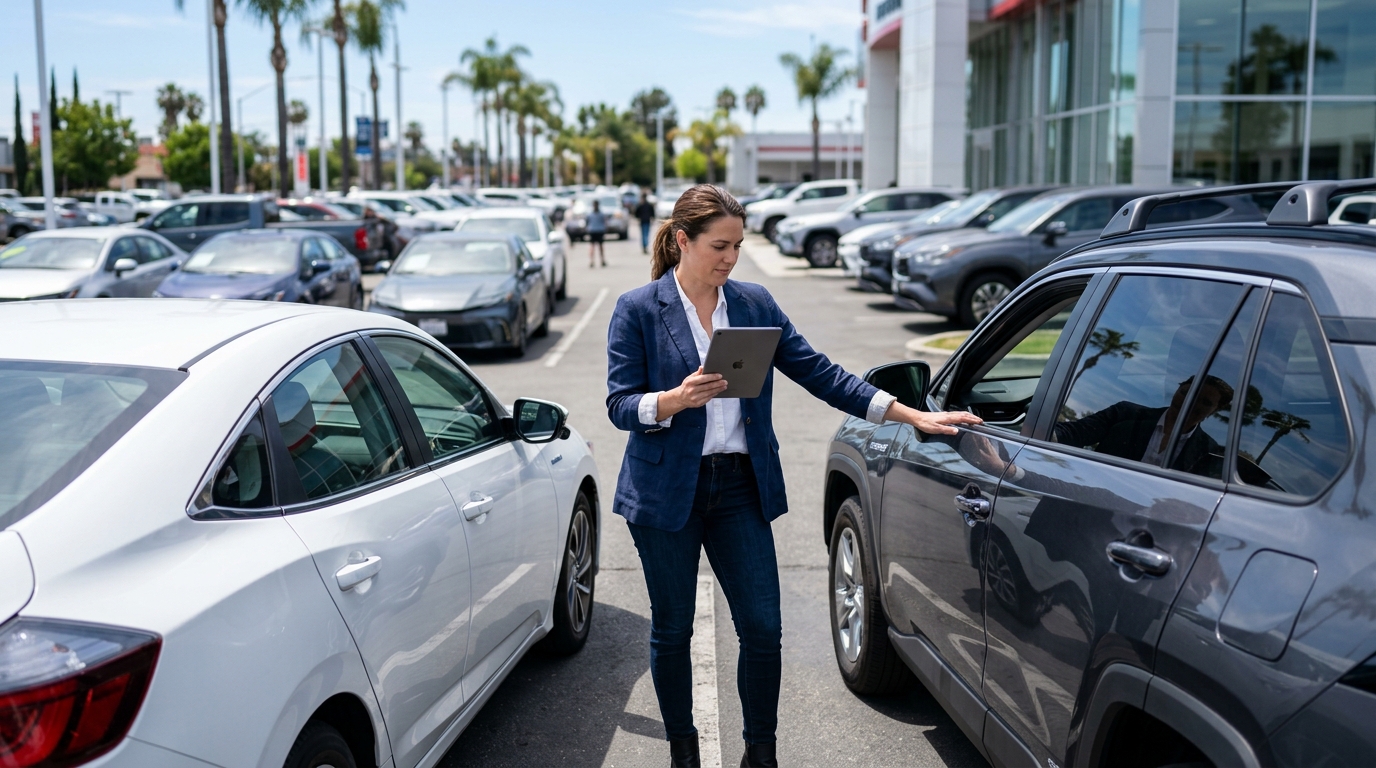
California Buyers Have More Powertrain Choices
The hybrid surge is occurring as California’s vehicle market becomes increasingly diversified. Buyers who once primarily compared gasoline engines by size and fuel economy can now choose among multiple levels of electrification.
A conventional hybrid may suit someone who wants improved fuel economy without plugging in. A plug-in hybrid may appeal to a driver who can charge regularly but still wants a gasoline engine for longer trips. Battery electric vehicles offer fully electric driving but bring charging availability and charging habits into the buying decision.
The size of California’s automotive market means even modest shifts in percentages can represent many vehicles. California DMV statistics show more than 36 million registered vehicles statewide as of January 1, 2026. The California DMV statistics page provides updated statewide registration context.
New registrations represent only part of that enormous vehicle population, but they provide an indication of where consumer demand is moving.
What To Watch During The Rest Of 2026
The second half of 2026 can show whether hybrid market share continues climbing or begins to level off. The second-quarter figure of 23.2 percent was already higher than the first-quarter share of 20.9 percent.
Vehicle availability may influence what happens next. Manufacturers continue adding hybrid versions across popular segments, giving California consumers more choices than were available several years ago.
Affordability may also remain part of the market picture. CNCDA’s broader outlook identifies elevated transaction prices, relatively high interest rates, and stagnant real personal incomes as pressures affecting overall new vehicle demand.
Fuel prices, incentives, financing conditions, new model introductions, and changes in electric vehicle demand could also alter the powertrain mix before the year ends.
Hybrids Are Becoming A Major Part Of The Market
California’s first-half 2026 numbers show that conventional hybrids have moved well beyond being a small alternative segment. With 191,000 registrations and 22.1 percent market share, they accounted for more than one in five new vehicles registered through June in the California Auto Outlook data.
The growth has also been consistent. Hybrid share increased from 9.2 percent in 2022 to 22.1 percent during the first half of 2026, and the second quarter reached an even higher 23.2 percent.
Gasoline vehicles still represent the largest individual powertrain category, and California continues to have a significant battery electric vehicle market. The latest numbers nevertheless show another important part of the state’s automotive transition: more drivers are choosing a combination of gasoline and electric power rather than moving exclusively toward either traditional gasoline vehicles or fully electric models.
The next California Auto Outlook should provide a clearer picture of whether the hybrid market can maintain its record share through the remainder of 2026.