California’s new vehicle market slowed during the first half of 2026. New light vehicle registrations fell 7.7 percent compared with the same period in 2025, according to the California New Car Dealers Association. The decline affected a market already dealing with vehicle affordability, borrowing costs, changing powertrain preferences, and uneven consumer demand.
Although registrations remained below last year’s level, the pace of the decline eased during the second quarter. Hybrid vehicles also continued gaining market share, showing that California buyers are changing what they purchase even as the overall market contracts.
California Registrations Fell 7.7 Percent Through June
The California New Car Dealers Association’s Q2 2026 Auto Outlook reported 864,848 new light vehicle registrations during the first six months of 2026. That compares with 936,543 registrations during the same period in 2025.
The figures cover new cars and light trucks rather than passenger cars alone. This broader light vehicle category includes many SUVs, crossovers, pickups, and other vehicles that make up a substantial part of today’s California market.
California’s 7.7 percent decline was also steeper than the national decrease reported by CNCDA. The U.S. new vehicle market declined 2.8 percent during the same period.
The difference shows that California entered 2026 with market conditions that were particularly challenging for new vehicle demand. However, the first and second quarters did not perform equally.
The Market Decline Moderated In The Second Quarter
California new vehicle registrations fell 9.1 percent during the first quarter of 2026 compared with a year earlier. During the second quarter, the decline narrowed to 6.3 percent.
That does not mean the market returned to growth. Registrations were still lower than the comparable period in 2025. However, the smaller second quarter decline suggests that the downward pace moderated as the year progressed.
CNCDA currently projects approximately 1.73 million new light vehicle registrations in California for the full year. That forecast represents a 3.9 percent decline from 2025.
Forecasts can change as economic and market conditions develop, so the final 2026 total may differ. Interest rates, vehicle prices, consumer income, fuel costs, inventory, incentives, and product availability can all influence purchasing activity during the remainder of the year.
Hybrid Vehicles Continue Gaining California Buyers
The overall market decline does not mean every vehicle category is losing momentum. Hybrid vehicles have become one of the clearest areas of growth within California’s new vehicle market.
CNCDA reported that conventional hybrids represented 22.1 percent of California’s new vehicle market through June 2026. That was the highest hybrid share recorded in the publication’s data series and an increase from 19.5 percent for all of 2025.
Hybrid market share also increased between the first and second quarters. It rose from 20.9 percent during the first quarter to 23.2 percent during the second.
Approximately 191,000 hybrid vehicles were registered during the first half of 2026, according to the report.
Gas Powered Vehicles Still Hold The Largest Share
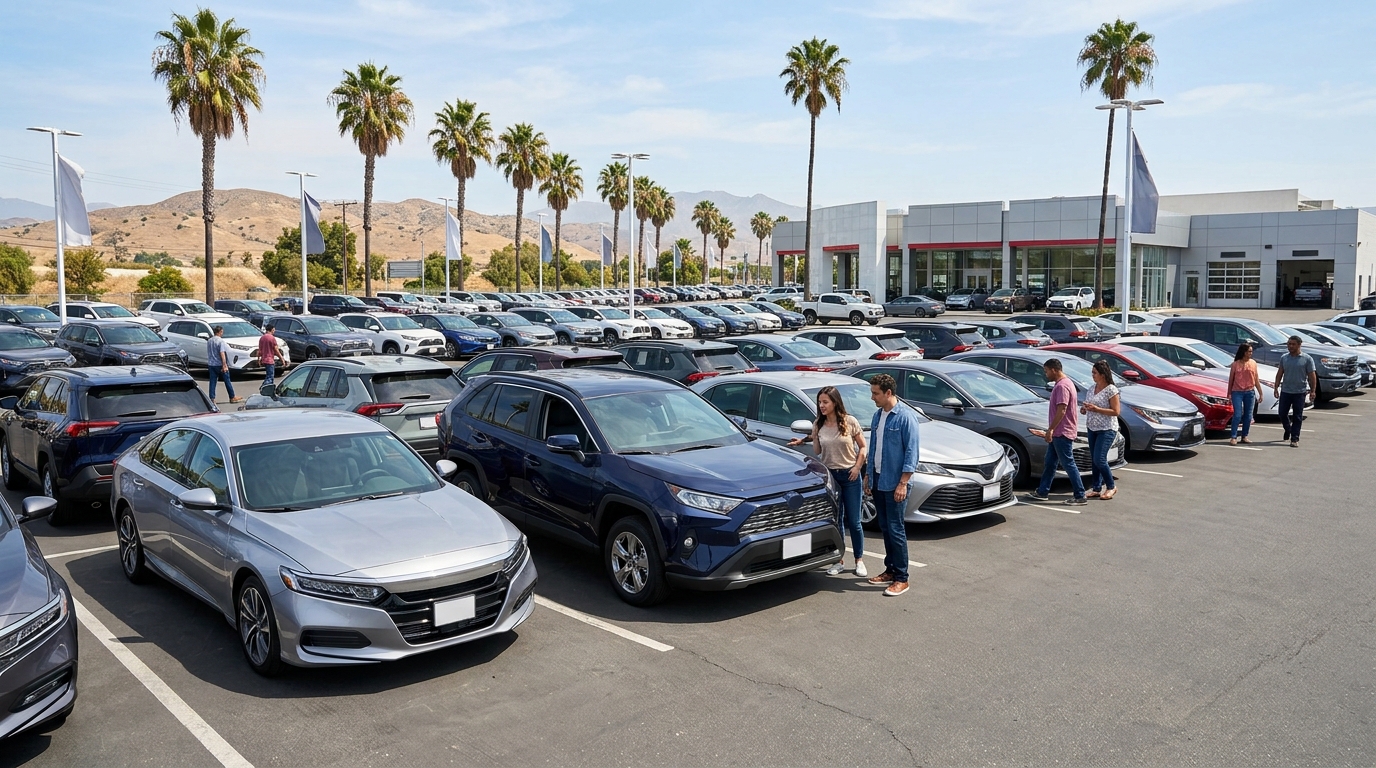
Despite the growth of hybrids and continued attention around electric vehicles, gasoline powered vehicles remained the largest individual powertrain segment. They represented 57.6 percent of new registrations through June, according to CNCDA.
This mix illustrates how California’s market is becoming more varied rather than moving uniformly toward one type of vehicle. Buyers currently have conventional gasoline models, hybrids, plug in hybrids, battery electric vehicles, and other options competing across numerous price ranges and vehicle classes.
Zero Emission Vehicles Remain A Major Market Segment
Zero emission vehicles also remain an important part of California’s automotive market, although their performance during 2026 has been uneven.
CNCDA reported 137,430 ZEV registrations during the first half of the year, a decline of 24.8 percent compared with the same period in 2025. Its data placed first half ZEV market share at 15.9 percent.
The quarterly trend was more positive. CNCDA reported that ZEV market share increased from 13.8 percent in the first quarter to 17.8 percent in the second quarter.
The California Energy Commission maintains a separate New ZEV Sales in California dashboard based on specialized analysis of DMV registration data. Differences in methodology can produce figures that do not exactly match industry market reports, so readers comparing datasets should review how each source defines a new vehicle sale or registration.
Affordability Continues To Shape The Market
Vehicle affordability remains one of the central issues surrounding California’s new car market. CNCDA cited elevated transaction prices, relatively high interest rates, and stagnant personal incomes as factors weighing on demand.
The purchase price is only one part of a vehicle buyer’s financial picture. Financing costs can materially change monthly payments, particularly on higher priced models or longer loan terms. Insurance, registration, fuel or electricity, maintenance, and depreciation can also affect total ownership costs.
These pressures may cause some shoppers to keep their existing vehicles longer, consider a lower priced model, compare new and used vehicles, or choose a different powertrain.
California already has an enormous existing vehicle population. The California DMV’s current statewide statistics list more than 36 million registered vehicles as of January 1, 2026. That large installed vehicle base means new vehicle purchases represent only part of the state’s overall automotive activity.
Delayed Purchases Could Provide Some Market Support
Although affordability is creating pressure, CNCDA also points to postponed vehicle purchases as a source of underlying demand. New vehicle sales remained below historical norms during several years following the pandemic, leaving some households with older vehicles that they have kept longer than originally planned.
An aging vehicle does not automatically result in a new purchase. Some owners may continue repairing their current cars, while others may move into the used market. Still, delayed replacement cycles can create demand when a household eventually decides that replacing an older vehicle makes practical financial sense.
This tension between affordability and replacement needs may help explain why the market can remain below prior levels without experiencing a uniform decline across every segment.
What Could Affect The Second Half Of 2026
Several factors are worth following as California moves through the remainder of 2026. Vehicle transaction prices and financing conditions remain significant. Hybrid availability may also matter as buyers continue showing strong interest in the powertrain.
California’s ZEV market has another changing factor. On August 7, the state announced that qualifying first time ZEV buyers could access new point of sale incentives through the MyFirstEV program. The current program offers up to $3,500 toward qualifying new zero emission vehicles and $1,750 toward qualifying used models, subject to program requirements.
Readers following that development can review the state’s August 2026 MyFirstEV announcement for current details.
The effect of incentives, fuel prices, financing conditions, inventory, and consumer confidence may become clearer when third quarter registration data becomes available.
California’s Auto Market Is Changing Along With Its Size
The first half numbers show a California new vehicle market that is smaller than it was a year earlier, but the headline decline tells only part of the story.
Registrations fell 7.7 percent through June, yet the rate of decline moderated during the second quarter. Hybrids reached a record share in CNCDA’s data, gasoline vehicles remained the largest segment, and ZEV share improved from the first to the second quarter.
For California drivers and automotive businesses, the remainder of 2026 may provide a clearer picture of whether the market continues stabilizing or remains under pressure. The next registration reports should also show whether strong hybrid demand persists and whether changing incentives contribute to another shift in California’s vehicle mix.